
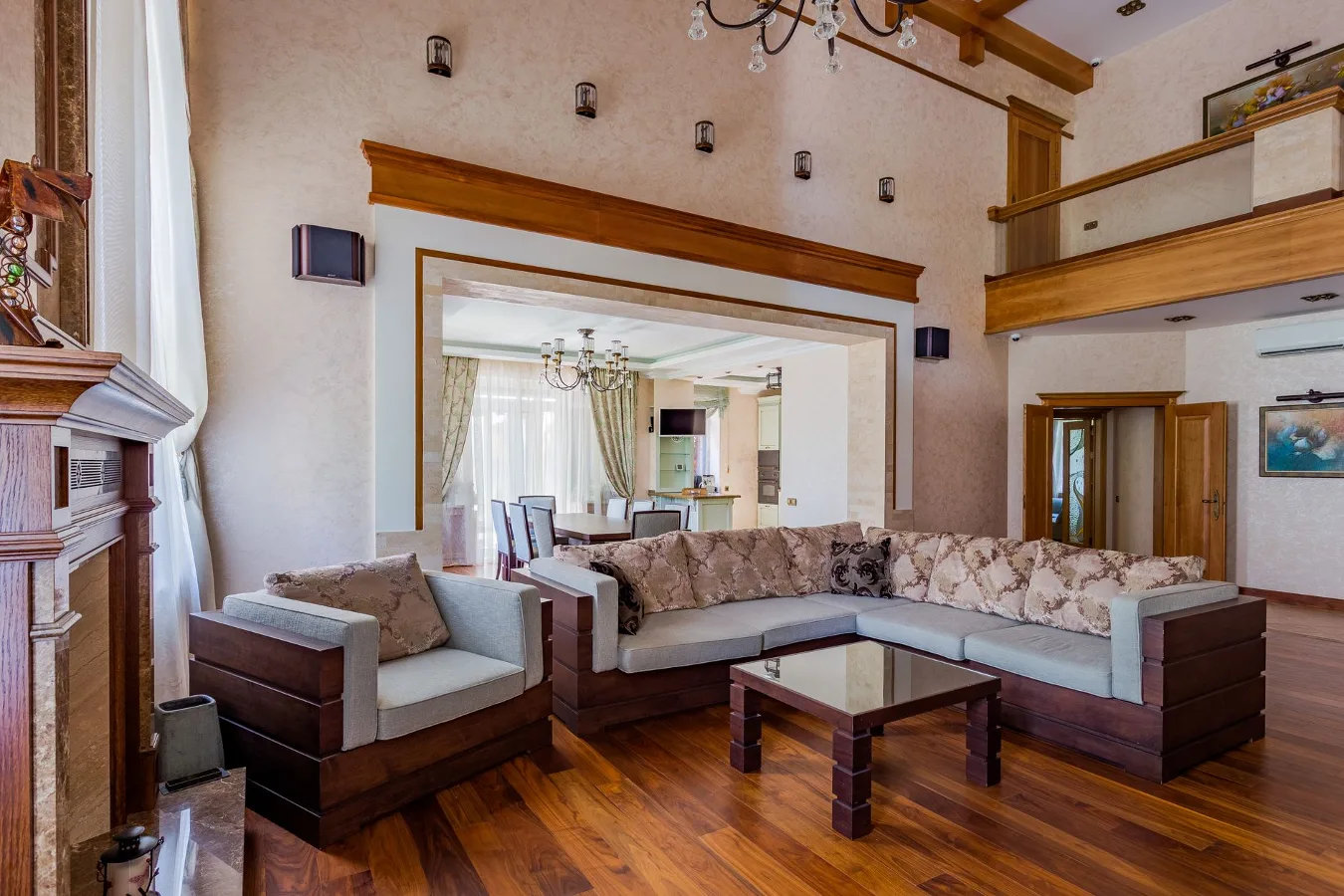
What a Giant Sectional Sofa Is Really For
A giant sectional sofa is less about size alone and more about solving a space problem: you need substantial seating, a coherent layout, and a piece that can make a large room feel intentional instead of scattered. For the right home, it becomes the anchor that brings the whole living area together.
These sofas are usually chosen for open-plan living rooms, large family rooms, media spaces, and homes where seating needs to accommodate several people at once. The appeal is obvious: one large arrangement can often do the work of multiple chairs and smaller sofas while creating a more relaxed, connected seating zone.
The challenge is that “giant” is not automatically better. A sectional that looks impressive online can feel awkward in a real room if it blocks pathways, overwhelms windows, or leaves no room for side tables. The best choice depends on how the room functions, how many people actually use it, and how much flexibility you want later. how to measure a room for a sectional offers more detail on this point.
The First Decision: Fit the Room Before You Fall in Love with the Shape
For a giant sectional sofa, room fit matters more than almost anything else. A large sectional can define a space beautifully, but only if the proportions work. Start with the floor plan, not the style photos.
Measure the room in zones, not just walls
It helps to think in terms of seating zone, walking paths, and clearance around doors, vents, windows, and furniture. A sectional that technically fits a wall may still be wrong if it makes the room difficult to use. Furniture guide offers more detail on this point.
- Mark the total footprint of the sectional on the floor with tape or paper templates.
- Check where chaise sections or corner modules will land.
- Leave room for everyday movement, not just opening day photos.
- Make sure the scale still works with coffee tables, lamps, and TV viewing distance.
A common mistake is focusing only on sofa length. Depth matters just as much. A very deep sectional can eat into the room faster than expected, especially in narrower living rooms or spaces with multiple entry points.
Choose a shape that matches the room’s job
The right configuration depends on how you live. An L-shaped sectional can work well in many rooms because it defines a corner without closing off the space. A U-shaped sectional creates a more enclosed, conversational feel and is often better for larger rooms that need a strong center of gravity. Modular sections are useful when flexibility matters, especially in homes that may change over time.
If the room is shared with dining or a play area, a more open configuration may be easier to live with than a dramatic wraparound design. If the space is dedicated to lounging or media viewing, a larger, more enveloping layout can make sense.
Comfort Depends on More Than Cushion Softness
People often shop for a giant sectional sofa by looking for the deepest cushions or the softest look, but comfort is more nuanced than that. A sofa can feel inviting for ten minutes and still be frustrating over a full evening if the seat height, back support, and cushion fill do not suit the household.
Seat depth changes how the sofa feels in real life
Deep seating can feel luxurious, but it is not equally comfortable for everyone. Taller people may appreciate the extra leg room, while shorter users may prefer a less cavernous seat that supports the back without requiring throw pillows to sit upright comfortably.
If the sofa will be used for both lounging and conversation, a balance is usually better than extreme depth. If the main purpose is movie nights, naps, or stretching out, deeper seats may be the right trade-off.
Support matters if the sofa will be used daily
There is a difference between a sectional that looks plush and one that holds up to everyday use. Cushion construction, back firmness, and frame stability all affect how comfortable the sofa remains after regular wear. A very soft cushion may initially feel inviting but can require more frequent fluffing and may show body impressions sooner.
For busy households, look for a comfort profile that balances softness with structure. That usually means the sofa should support long sitting sessions without feeling overly rigid or overly sink-in.
Think about who uses it most
A giant sectional sofa should suit the people who will use it most often, not just the one who chooses it. Families with children, tall adults, older adults, and pet owners may all value different things. For example, a seat that is easy to stand up from may matter more than an ultra-plush design in some homes, while a sprawling lounge layout may be ideal in a casual media room.
Materials and Upholstery: Where Daily Reality Shows Up
Upholstery choice changes how a giant sectional sofa looks, feels, and ages. Since large sofas are highly visible and heavily used, the material should fit the room’s lifestyle as well as its style.
Fabric choice shapes upkeep
Some fabrics are more forgiving in busy homes, while others demand more careful use. Performance fabrics are often considered for family seating because they are designed with easier cleanup in mind, though the exact benefits vary by product. Textured weaves can be more forgiving visually than smooth, solid surfaces, while very light colors may show wear faster in active spaces. best fabrics for everyday family seating offers more detail on this point.
Natural-looking fabrics can create a relaxed, high-end feel, but they may also need more attention if the room is used heavily. If you want a sofa to feel effortless, consider how much time you are willing to spend on routine care.
Leather and leather-like options have different trade-offs
Leather can bring a tailored look and can be easier to wipe down than some fabrics, but it may show scratches, temperature changes, and patina over time. Faux leather and similar surfaces may offer a different balance of price, maintenance, and appearance, but durability can vary widely. The key is not to assume all smooth upholstery behaves the same way.
Color choice affects the room more than many buyers expect
A giant sectional sofa dominates the visual field, so its color changes the entire atmosphere of the room. Dark tones can ground a large space and feel more practical in some households. Light tones can make a room feel airy, but they may require more care. Mid-tone neutrals are often the safest long-term choice if you want flexibility with pillows, rugs, and wall color.
How to Match the Sofa to the Rest of the Room
Because this is a large piece, it should work with the room rather than compete with it. The surrounding furniture, rug, lighting, and wall space all affect whether the sofa feels intentional or oversized for the sake of being oversized.
Scale the surrounding pieces appropriately
One overlooked issue is underfurnishing around a giant sectional. A too-small coffee table, tiny side tables, or undersized artwork can make the sofa seem even larger. Balance the arrangement with pieces that hold their own visually.
- Choose a coffee table that does not look lost in front of the sectional.
- Use lighting that reaches all seating areas without cluttering the floor plan.
- Anchor the room with a rug sized for the seating zone, not just the sofa.
- Keep walkways open so the room still feels easy to move through.
If the room is open to another area, the sectional may need to act as a visual divider. In that case, its back and side profile matter as much as the front. A bulky silhouette can make the room feel heavy if it is not balanced by open space elsewhere.
Consider modular flexibility
Modular sectional systems are often worth considering when the room may change. They can be easier to adapt if you move, rearrange the layout, or need to accommodate a new living pattern. That flexibility can be especially useful in larger homes where the room’s purpose may shift over time.
The trade-off is that modular options may show seams or connectors more obviously than a fixed sofa. For some buyers, that is a reasonable compromise. For others, a one-piece look feels cleaner and more finished.
Practical Buying Guidance: What to Ask Before Ordering
Buying a giant sectional sofa is part furniture decision, part logistics decision. A beautiful piece can become a headache if it cannot be delivered into the home or does not suit the way the household lives.
Check the path from curb to room
Delivery access is one of the most common real-world constraints. Measure doors, stair turns, hallways, and elevator access before ordering. A sectional that arrives in multiple pieces may still require careful maneuvering, and assembly requirements vary.
This is especially important in apartments, townhomes, and older houses with tighter openings. If the sofa must travel through narrow passages, a modular design may be more practical than a large fixed frame.
Understand the maintenance commitment
Large sofas collect dust, lint, and everyday wear simply because they are used so often. Think about how easy the upholstery is to vacuum, whether cushions are removable, and how much routine care the fabric needs. Families with pets or children often benefit from cleaner lines and simpler surfaces that are easier to manage.
A common misconception is that a giant sectional sofa is always the most forgiving choice for families because it offers so much seating. In reality, the larger the piece, the more visible wear can become if cleaning and care are difficult.
Look at the warranty and construction details carefully
Without relying on sales language, focus on the basics: frame construction, cushion support, fabric type, and what the warranty does and does not cover. Since giant sectionals are a significant purchase, small differences in construction can matter over the long term.
If the product description is vague, that is a useful signal. Clear information about dimensions, configuration, and materials tends to indicate a more transparent shopping experience.
Best Use Cases: Where a Giant Sectional Makes the Most Sense
Not every home needs a giant sectional sofa, but certain spaces benefit from one more than others. The strongest fit tends to be a room that already has room to spare and a clear seating purpose.
- Large family rooms: Ideal when everyone gathers in one area and shared seating matters more than formal arrangement.
- Open-plan living spaces: Useful for defining a lounge zone without adding extra chairs.
- Media rooms: Good for relaxed viewing, especially when lounging and stretching out are priorities.
- Homes that host often: Helpful when you need to seat multiple guests without rearranging furniture.
By contrast, a giant sectional is usually less practical in compact living rooms, highly formal spaces, or rooms that need a lot of flexibility for daily traffic. In those cases, a smaller sectional, a sofa with chairs, or a modular mix may work better.
Common Mistakes to Avoid
The most expensive mistake is buying on appearance alone. Large sofas are commitment pieces, and the wrong one can shape the room in all the wrong ways.
- Choosing size without mapping the room: A sofa can be technically “large enough” and still be poorly placed.
- Ignoring seat depth: Comfort changes dramatically depending on how you sit.
- Forgetting delivery access: A perfect sofa is useless if it cannot reach the room easily.
- Underestimating visual weight: The wrong color or shape can make the room feel heavy.
- Overlooking upkeep: A high-maintenance material may become frustrating fast in a busy home.
Another subtle mistake is assuming every giant sectional needs to be the centerpiece in the same way. Some rooms benefit from a bold, sculptural sofa; others need a quieter shape that lets windows, fireplaces, or built-ins remain the stars.
How to Decide If a Giant Sectional Sofa Is the Right Buy
The best choice usually comes down to a few practical questions. Do you have enough space for the footprint and circulation? Does the room need one large seating zone? Will the upholstery suit your household’s level of use? Can the sofa be delivered and maintained without creating frustration?
If most of those answers are yes, a giant sectional sofa can be one of the most efficient ways to furnish a large room. It offers scale, seating, and a strong visual anchor in a single piece. If several answers are uncertain, a modular or smaller configuration may be the smarter long-term choice.
The smartest shoppers treat size as only one part of the decision. In a room this large, the right sofa is not just about filling space. It is about shaping how the room works every day.