
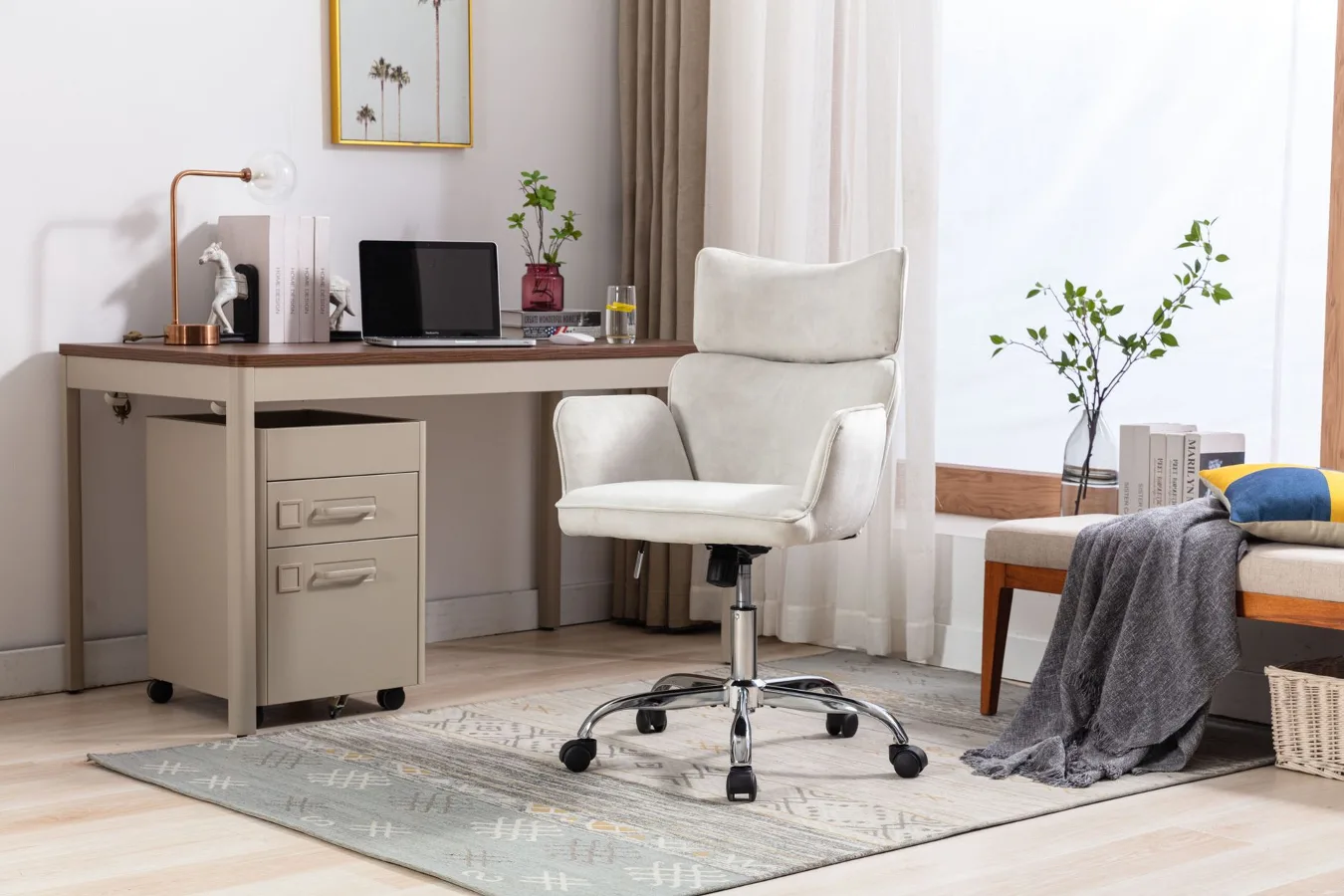
A velvet office chair is usually the right choice when you want your workspace to feel more refined, softer, and less utilitarian than a standard mesh or vinyl task chair. It can work especially well in a home office, a client-facing room, or a bedroom workspace where style matters as much as seating. The trade-off is simple: velvet looks rich and inviting, but it also asks for more care, more attention to maintenance, and a closer look at comfort details before you buy.
If you are deciding whether velvet makes sense for your office, focus on how the chair will be used. For occasional laptop work, a velvet chair can be a strong fit. For long daily sessions, you will want to look carefully at support, adjustability, and the chair’s overall construction rather than stopping at appearance alone.
When a velvet office chair makes sense
Velvet office chairs tend to shine in spaces where the chair is part seating, part decor. They often suit home offices that share space with living areas, compact apartments, dressing rooms, creative studios, and guest workstations. In those settings, the upholstery helps the chair blend with furniture rather than look purely functional.
They also make sense if you prefer a softer visual profile. Velvet can absorb light in a way that feels warm and subdued, which is useful in rooms with a lot of hard surfaces, bright equipment, or neutral furniture. If your workspace feels cold or overly technical, velvet can change the mood without requiring a full redesign.
That said, the material is not automatically the best choice for everyone. If your workspace sees heavy, all-day use, or if you tend to eat, drink, or switch tasks often at your desk, the upkeep may become more noticeable. Velvet is best chosen with realistic expectations rather than a purely aesthetic impulse.
What to look at before you buy
A velvet office chair should be judged on more than the fabric. The most useful buying decisions come from combining style, seating fit, and practical construction details. A beautiful chair that is awkward to sit in will become a design problem very quickly.
Comfort and support
The first question is whether the chair supports the kind of work you do. A velvet chair may feel plush at first touch, but that does not tell you much about how it supports your back, hips, or shoulders over time. Look at the seat depth, back height, and whether the chair encourages a posture you can maintain without strain.
If you work for long stretches, a model with a supportive backrest and adjustable seat height will usually be more useful than one chosen only for its upholstery. Armrests can help, but only if they are positioned in a way that matches your desk height and body proportions. Otherwise they can interfere with pulling the chair close to the desk.
Seat shape and sizing
Velvet can make a chair appear more compact or more substantial than it really is, so check dimensions carefully. Seat width, seat depth, and overall chair height should match your desk and your body size. A chair that looks elegant in photos may feel cramped in person if the seat is shallow or if the backrest sits too low.
For smaller offices, a slim silhouette is often easier to live with than an oversized, lounge-like profile. In larger rooms, a roomier chair can work as both task seating and an accent piece. The key is to think about how much space you have to move around the desk, not just how the chair will look when stationary. how to choose the right desk chair offers more detail on this point.
Adjustability
Many velvet office chairs lean decorative, but a good one should still behave like a real desk chair. Height adjustment is the most important feature for most buyers because it helps align the seat with the desk and supports better typing posture. Tilt function can also improve comfort, especially if you alternate between focused work and reading.
Some velvet chairs are built more like accent chairs on casters, while others are full task chairs. The first group may look better in a styled room, but the second group usually performs better for work. If the chair will be used every weekday, prioritizing adjustability is usually the smarter choice.
Frame and base construction
The frame, base, and caster quality matter just as much as the fabric. Velvet upholstery will not compensate for a wobbly base or a seat that loses support too quickly. Look for a chair that feels stable when you sit down, turn, and roll. If the chair has a swivel base, make sure the movement feels smooth rather than loose or noisy.
For some shoppers, the overlooked detail is caster compatibility. A chair that looks ideal on hardwood may not roll well on carpet, and a chair made for hard floors may need a mat to preserve both the wheels and the flooring. This is one of the most common surprises with stylish office seating: the upholstery gets all the attention, while the base is what determines daily usability.
Velvet type and upkeep
Not all velvet behaves the same way. Some velvet-like fabrics are more durable and easier to maintain than delicate decorative versions. You will often see terms such as performance velvet or polyester velvet, which can signal a more practical approach to office seating. The exact fabric content matters because it affects feel, staining resistance, and cleaning routine.
For a workspace, the best velvet is usually one that balances softness with easier care. A fabric that shows every mark or attracts lint quickly may become frustrating in a room used every day. If you want the look of velvet but less upkeep, this is where construction details matter more than brand imagery.
Step-by-step: how to choose the right one
- Start with the room. Decide whether the chair should blend into a home office, act as an accent piece, or serve as a fully functional task chair.
- Measure the desk and floor space. Check clearance for the chair base, armrests, and rolling movement so the chair does not crowd the workspace.
- Match the chair to your work style. Light computer use, writing, meetings, and long editing sessions place different demands on seating.
- Check support before style. Look for a backrest, height adjustment, and a seat shape that suits your posture needs.
- Review fabric care. Think about lint, dust, spills, and how often you are willing to clean the upholstery.
- Evaluate the base and casters. Make sure the chair will work on your flooring and will not feel unstable during daily use.
- Consider how the chair will age. Choose a style and color you can live with over time, not just one that feels fashionable today.
Practical examples of where velvet works best
A velvet office chair is often most effective in a few specific scenarios. In a home office that doubles as a guest room, it can soften the room and keep the workspace from looking overly corporate. In a creative studio, it can add personality without needing more decor. In a compact apartment, a velvet chair may do double duty as desk seating and occasional extra seating for visitors.
It can also be a smart choice if your office style leans toward traditional, art deco, mid-century, or boutique-inspired interiors. The material naturally pairs well with wood finishes, brass accents, marble-look desks, and warm lighting. That said, velvet can also work in modern spaces if the chair shape is clean and the color is restrained. Red and Black Gaming Chair Guide offers more detail on this point. Office Desk Chair Wheels: A Practical Guide offers more detail on this point.
Where velvet is less ideal is in a heavy-use workstation that demands maximum practicality. If the chair will be pushed in and out constantly, exposed to frequent spills, or shared by different users throughout the day, a tougher office-chair fabric may be easier to live with.
Common mistakes shoppers make
The most common mistake is choosing a velvet office chair because it looks luxurious in a photo, then discovering that the dimensions are not suitable for desk work. A chair can be beautiful and still fail at the basics of fit and support.
Another mistake is ignoring the maintenance routine. Velvet is not necessarily difficult to care for, but it does reward regular attention. Dust, crumbs, lint, and flattened pile can change the look of the chair more quickly than many buyers expect. If you prefer furniture that stays visually neat with almost no effort, velvet may feel like more work than anticipated.
A third issue is assuming all velvet chairs are equally comfortable. Some are built as accent seats with office styling, not as serious task chairs. That difference matters. A chair can have casters and a swivel base and still be better suited to occasional use than long workdays.
Finally, shoppers sometimes overlook floor protection. A rolling velvet chair on hardwood or laminate may need a mat, especially if the casters are firm or the chair will move often. That small detail can affect both convenience and flooring wear.
Alternatives worth considering
If you like the idea of a softer, more tailored office chair but want less upkeep, there are a few useful alternatives. Bouclé can offer a textured, design-forward feel, though it has its own cleaning considerations. Faux leather gives a polished look and is often easier to wipe clean, but it can feel less breathable and may suit some interiors better than others. Fabric task chairs can strike a middle ground if you want comfort without the visual drama of velvet.
For people who want a more ergonomic setup, a mesh task chair may be the better baseline. It usually offers better airflow and often more obvious work-chair functionality. You can still bring warmth into the room through a rug, drapery, or a decorative lamp if you prefer not to compromise on support.
If the goal is purely visual, a velvet accent chair used beside the desk may be a better solution than making the main office chair decorative. That way you keep a highly functional seating option at the desk and still get the rich look of velvet elsewhere in the room.
A simple checklist before you commit
- Does the chair fit your desk height and leg space?
- Will you use it for occasional work or full workdays?
- Does the chair offer enough support for your typical sessions?
- Is the velvet or velvet-like fabric easy enough for your routine?
- Will the base and casters work on your floor type?
- Does the style still make sense if your room changes later?
- Can you keep the chair looking presentable with regular light care?
If most of your answers point toward comfort, fit, and manageable upkeep, a velvet office chair can be a strong addition to a home workspace. If your answers lean toward maximum durability, minimal maintenance, and all-day ergonomic support, it may be wiser to keep velvet as an accent material and choose a more task-focused chair for daily use.
Used thoughtfully, velvet brings a kind of softness that many offices lack. The best version is not simply the prettiest one. It is the chair that suits your room, your routine, and the amount of maintenance you are genuinely willing to do.