
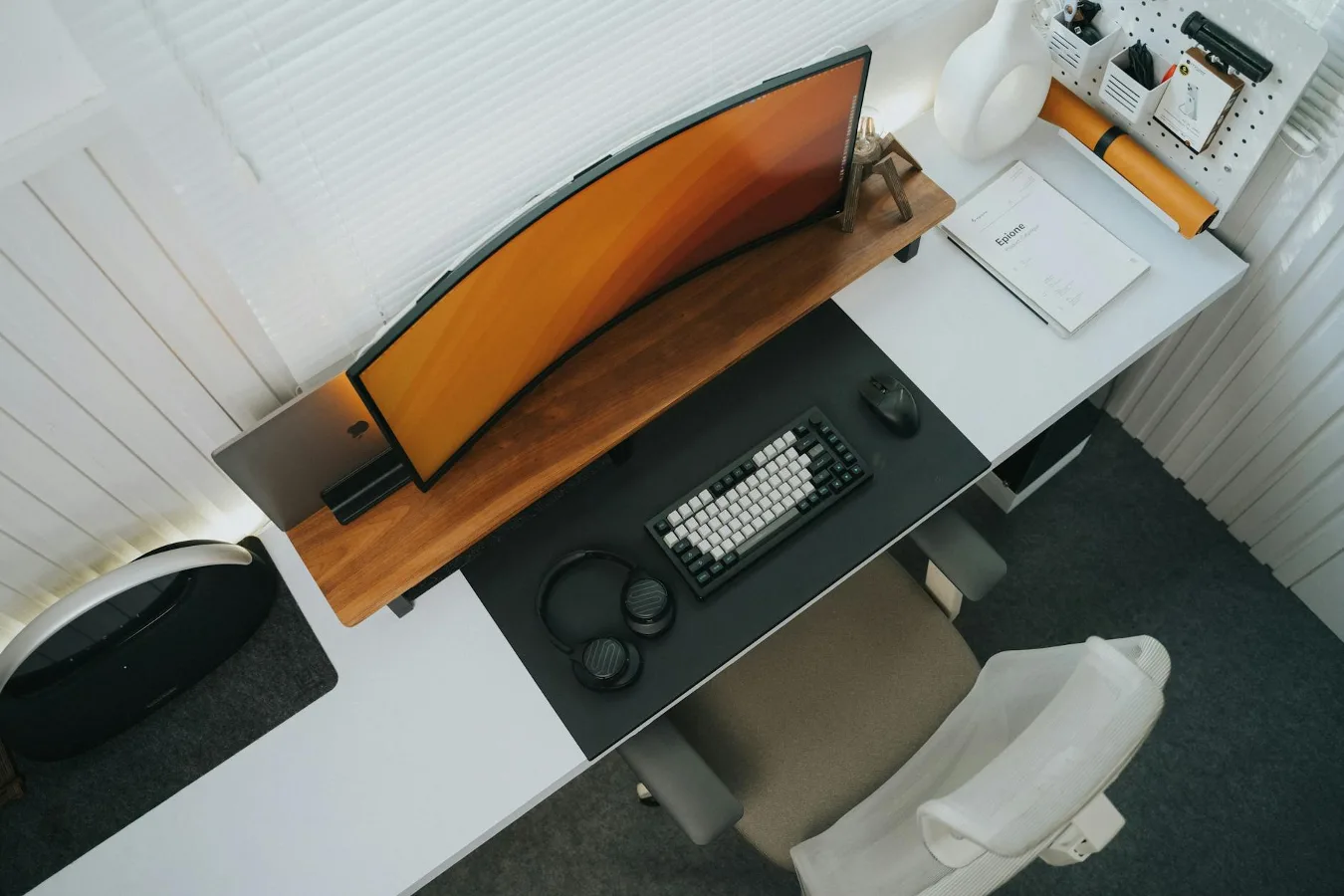
What a walnut standing desk is really good for
A walnut standing desk is a practical choice for anyone who wants the flexibility of an adjustable-height workstation without giving up a warmer, more furniture-like look. Walnut is often chosen for its rich tone and visual depth, which can make a home office feel less utilitarian than a plain laminate setup. adjustable desk buying basics offers more detail on this point.
The main appeal is the combination of function and finish. You get the movement and ergonomic benefits associated with standing desks, but the surface can feel closer to a well-made piece of furniture than standard office equipment. That matters in rooms that do double duty, especially when the desk will be visible in a living area, bedroom, or open-plan space.
For most buyers, the real question is not whether walnut looks good. It is whether the desk construction, frame quality, and surface material match the way you work every day.
Who should consider one
A walnut standing desk makes sense if you want a desk that blends into a refined interior while still supporting changing work positions. It is especially appealing for:
- Home office users who want a more polished look than typical black or white office furniture
- People furnishing shared spaces where the desk remains visible outside work hours
- Buyers who value wood tone and texture in their furniture choices
- Workers who plan to use a height-adjustable desk for long periods and want a calmer visual presence
It is less compelling if your priority is the lowest possible price or the most rugged utility-first surface. Some buyers also prefer a lighter wood tone or a highly minimalist aesthetic, in which case walnut may feel visually heavier than they want.
The biggest trade-off: style versus build
The phrase “walnut standing desk” can describe several very different products. Some have a solid walnut top, some use walnut veneer over a core material, and others simply use a walnut-colored finish. Those distinctions matter more than the marketing name suggests.
A solid walnut top can offer rich character, but it is usually more expensive and may require more care over time. Veneer can deliver a similar visual effect with better cost efficiency and improved material stability, depending on how the panel is built. A walnut-look laminate or melamine surface is easier to maintain and often more budget-friendly, but it may not provide the same tactile feel or depth of grain.
The frame matters just as much as the desktop. A beautiful walnut surface on a shaky or underpowered lifting base will disappoint quickly. If the desk will hold multiple monitors, a laptop dock, a printer, or other gear, stability should be treated as a core decision factor, not a secondary detail.
Material and spec factors worth comparing
Desktop construction
Start by identifying what the top is actually made of. Solid wood, veneer, and engineered board each behave differently. Solid wood has natural variation and can be repaired more readily in some cases, but it can also be more reactive to humidity changes. Veneer uses a thin wood layer over a core, often giving a more consistent appearance. Engineered surfaces can be the easiest to live with if you want low maintenance.
Do not assume that a darker finish means better quality. A walnut tone can be applied to many substrates, and the look alone does not tell you how durable the desktop will be in daily use.
Frame type and lifting system
Most shoppers choosing a walnut standing desk are actually deciding between electric and manual adjustment systems. Electric frames are the more common choice for regular use because they make transitions smoother and encourage position changes throughout the day. Manual options can work for lighter-duty use or smaller rooms, but they usually ask more of the user. standing desk frame options offers more detail on this point.
Frame design also affects legroom, cable routing, and the overall footprint. A clean design can make a desk feel less bulky, but not every sleek frame is equally stable. Pay attention to the base shape, crossbar placement, and whether the frame is designed to handle the width of the desktop you want.
Surface finish
Finish influences both appearance and upkeep. A matte or satin finish can reduce glare, which is useful in bright offices and rooms with direct light. Higher-gloss surfaces can look richer in some settings but tend to show fingerprints, dust, and scratches more readily.
If the desk will be used for writing, drawing, or long laptop sessions, think about how the finish feels under your arms and whether it will be easy to clean without special products. how to measure for a new desk offers more detail on this point.
Size and proportions
Desk size should be chosen around your equipment and room layout, not just aesthetics. A walnut standing desk can look elegant at a compact footprint, but it still needs enough width for comfortable work. Measure for monitor arms, a keyboard tray if applicable, and any under-desk accessories before buying.
Depth is easy to overlook. A shallow desk may look neat in photos but feel cramped once you place a monitor at a comfortable viewing distance. If you work with papers, sketch pads, or multiple screens, extra depth can make the desk feel far more usable.
Weight capacity and stability
Many buyers focus on finish and ignore load handling. That is a mistake. A standing desk has to stay stable both in seated position and when raised. The more equipment you place on top, the more important this becomes. Stability affects typing comfort, monitor shake, and the overall impression of quality.
If you plan to use a heavier desktop or a multi-monitor setup, check that the frame and top are meant to work together. A premium-looking walnut surface does not compensate for an underspecified base.
How walnut changes the feel of a workspace
Walnut can make a workspace feel more grounded and less technical. That is one reason it works well in rooms that need to look inviting, especially if the desk is part of a larger furniture arrangement rather than a dedicated office suite.
The wood tone pairs well with black metal frames, neutral paint colors, warm textiles, and matte accessories. It can also help a standing desk avoid the “equipment” look that some adjustable furniture has. For some buyers, that visual softness is as valuable as the ergonomic function itself.
There is a practical side to this too. People are often more willing to keep a desk clear and organized when it looks like a considered piece of furniture. That does not change the mechanics, but it can change how the space is used.
Common limitations to keep in mind
Walnut desks are not automatically better than lighter alternatives. They can show dust more clearly than you expect, and some finishes make fingerprints visible in certain lighting. If you choose a real wood surface, you may need to be more attentive about moisture, coasters, and regular care.
Another limitation is visual weight. Walnut can dominate a small room if the rest of the furniture is already dark or bulky. In compact apartments or multipurpose rooms, a walnut standing desk works best when the surrounding pieces are kept simple.
There is also the cost-versus-appearance trade-off. If your budget is limited, you may find that a high-quality frame with a modest desktop is a better investment than an ornate finish with weak mechanical components. For a standing desk, the mechanism and stability often matter more than the species name alone.
Alternatives worth considering
If walnut feels too formal or too dark, there are sensible alternatives:
- Oak or ash finishes: lighter and often better for brighter, Scandinavian-inspired interiors
- Maple or birch tones: clean and understated, with a more open visual feel
- Laminate in a wood pattern: useful for easy upkeep and budget-conscious setups
- Black or white desktops: better if you want the desk to disappear visually and let other furniture stand out
Some buyers also decide to buy the frame and desktop separately. That path can make sense if you want more control over material, size, and style. It does, however, require more attention to compatibility and mounting details.
Buyer scenario: choosing the right setup for your room
If you work from home full time, a walnut standing desk is most compelling when the desk will be used every day and seen often. In that case, prioritize a stable frame, a finish you can live with, and dimensions that support your actual workflow.
If the desk is for part-time use in a guest room or living area, appearance may matter even more than raw storage capacity. A walnut surface can help the workspace blend into the room instead of interrupting it. In those settings, a simpler desktop with a cleaner frame may be a better match than a large executive-style desk.
If you are outfitting a shared office, the most important factor is usually balance: enough surface area for practical use, enough warmth to feel inviting, and enough restraint to work with different tastes.
Common mistakes shoppers make
- Choosing finish before frame quality
- Buying a desk that is too shallow for monitors and accessories
- Assuming all walnut products are solid wood
- Ignoring cable management until after setup
- Overlooking how dark wood will look in low-light rooms
- Forgetting to check the desk’s adjustment range for the primary user
A particularly common misconception is that the wood species alone defines value. In reality, the core material, lift mechanism, edge treatment, and finish durability all affect how the desk will age.
Next steps before you buy
Before choosing a walnut standing desk, compare three things first: how the top is built, how stable the frame is, and how the size fits your space. Those are the decisions that determine whether the desk will be pleasant to use every day.
Then consider the room itself. If the desk is part of a visible living space, the walnut finish may be a major advantage. If it is going into a purely functional office, you may care more about durability and adjustment quality than appearance.
A good walnut standing desk should do more than look refined. It should support your posture, fit your equipment, and hold up to real daily use without becoming fussy. That balance is what separates a thoughtful purchase from a surface-level style choice.