
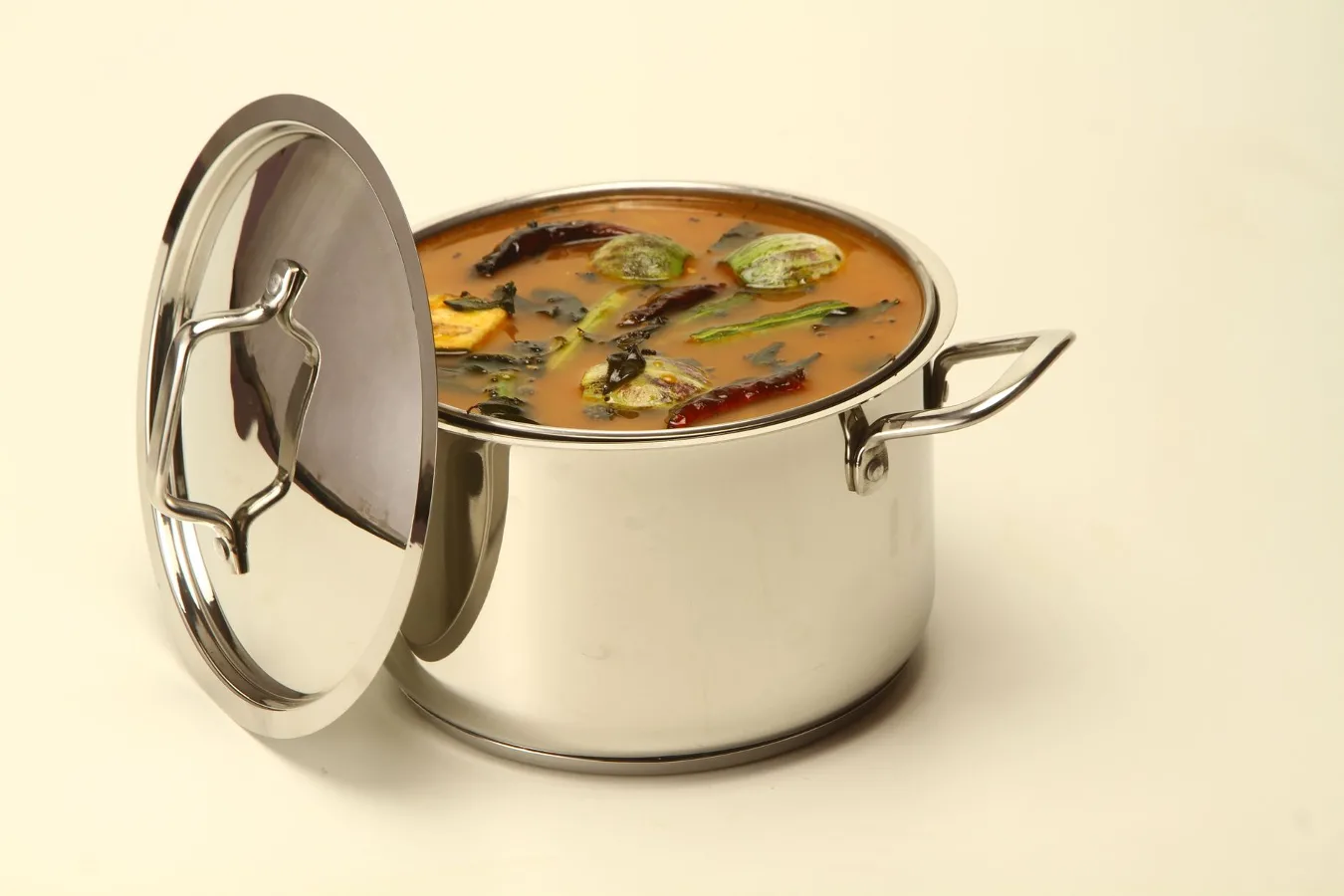
Who an 18/10 stainless steel cookware set is best for
If you want a cookware set that can handle everyday cooking without demanding delicate care, an 18/10 stainless steel cookware set is usually aimed at that middle ground between convenience and long-term durability. It suits home cooks who want pans for searing, sautéing, simmering, boiling, and finishing dishes in the oven, while also preferring a clean, polished look that holds up well over time. cookware handle design and comfort offers more detail on this point.
This type of set is especially appealing if you cook a mix of sauces, vegetables, grains, proteins, and one-pan meals. Stainless steel is nonreactive, so it is a practical choice for tomato sauces, wine reductions, and acidic ingredients that can sometimes react with other metals. It is also a strong option for cooks who want a set that can move from stovetop to oven without feeling like specialized gear.
The main trade-off is that stainless steel does not behave like nonstick. Food can stick if the pan is used at the wrong temperature or if the cooking method is mismatched. That makes the set a better fit for cooks who are willing to learn a little technique in exchange for broader versatility.
What 18/10 actually means
The label 18/10 refers to the alloy composition of the stainless steel: 18% chromium and 10% nickel. Chromium helps resist corrosion and staining, while nickel contributes to shine and overall corrosion resistance. In cookware, that combination is commonly used for the cooking surface and exterior finish in many stainless steel pieces.
One common misconception is that 18/10 automatically means a pan will cook better than any other stainless steel pan. In reality, the cooking experience depends more on the construction than on the alloy label alone. A well-made pan with a conductive core and a flat base can outperform a flashy set with poor heat distribution.
Another important nuance: not every part of a cookware set is made entirely from 18/10 steel. Many sets use layered construction with an aluminum or copper core to improve heat conduction, while the interior cooking surface may be 18/10 stainless steel. That combination is often where the real performance comes from.
The buyer scenario that fits this set best
An 18/10 stainless steel set makes the most sense for a buyer who wants one system that can cover most of the kitchen without leaning too heavily on specialty pans. If you are replacing an older mismatched collection, moving into your first serious kitchen, or looking for a set that can support both simple weeknight meals and more involved cooking, this category is worth close attention.
It is also a sensible choice for people who dislike replacing cookware frequently. Stainless steel generally offers good long-term value because it is not dependent on a delicate coating to remain usable. If a pan is built well, it can stay in service for a long time as long as it is cared for properly.
On the other hand, if your cooking style relies heavily on eggs, delicate fish, or very low-fat cooking, a full stainless set may not be the only thing you need. Many households do best with a stainless steel set plus one or two nonstick pieces for the jobs that call for easier release.
Construction matters more than the alloy label
When comparing stainless steel cookware, construction is often the deciding factor. The most common options are fully clad or disc-bottom designs, and the differences affect heat behavior more than many shoppers realize.
Tri-ply and multi-ply construction
Tri-ply cookware typically sandwiches an aluminum core between stainless steel layers. Multi-ply cookware uses additional layers to shape heat responsiveness and durability. The main benefit is more even heat distribution across the pan, which can reduce hot spots and make sauces and proteins cook more consistently. what tri-ply cookware means offers more detail on this point.
For buyers, this usually means better day-to-day usability. A pan that heats evenly can be easier to learn and more forgiving during simmering or pan sauces. The trade-off is that thicker construction can feel heavier in the hand, so comfort matters if you cook frequently or have limited grip strength.
Fully clad vs. encapsulated base
Fully clad cookware carries conductive layers up the sides of the pan, not just in the base. That can improve overall heat control and consistency. Encapsulated-base pieces may heat the bottom well but can be less responsive on the sides, which is often fine for boiling water, soups, and basic simmering.
If your cooking leans toward sautéing, pan sauces, and reducing liquids, fully clad construction is often the more versatile choice. If you mostly need straightforward pots for boiling and warming, a simpler base design may still be perfectly adequate.
Material and spec factors to compare before buying
Shoppers often focus on the stainless steel grade and overlook the practical details that determine whether a set works well in daily use. The best choice depends on how the pieces are built and how they match your stove, cooking habits, and storage space.
Heat source compatibility
If you cook on induction, confirm that the set is induction-compatible. Stainless steel by itself is not always enough; the base must be designed to work with induction cooktops. If your kitchen uses gas, electric, or ceramic, compatibility is usually less complicated, but a flat, stable base still matters for contact and control.
Handle comfort and heat management
Handles are easy to ignore during shopping and difficult to ignore during cooking. Look for handles that feel balanced, stay secure in the hand, and are shaped to make lifting easier when a pot is full. Stay-cool behavior can help, but handles can still become warm during long cooking sessions or oven use, so kitchen safety still matters.
Riveted handles are common in stainless steel cookware because they provide a durable connection. The downside is that food can collect around the rivets, which means a little extra cleaning. That is a real-world trade-off, not a dealbreaker, but it is worth knowing before you buy.
Lids, rims, and pour control
Well-fitting lids help regulate moisture and heat. A lid that sits securely can be useful for simmering grains, braising smaller portions, or reducing splatter. Rolled or flared rims can also improve pouring, especially on saucepans and smaller stockpots.
If you often make soups or sauces, small details like lid fit and pouring accuracy may matter more than having the largest number of pieces in the box. A thoughtfully designed 5- or 7-piece set can be more useful than a larger set filled with redundant sizes.
Weight and balance
Stainless steel cookware can range from lightweight to substantial. Heavier pans often feel more stable on the burner and may distribute heat more evenly, but they can be harder to maneuver. Lighter pans are easier to lift and store, though they may not feel as robust. The right balance depends on who will use the cookware most often.
What you gain, and what you give up
An 18/10 stainless steel set offers several advantages, but a clear-eyed view of the limitations will help you choose better.
Why buyers like it
- Durability: Stainless steel is built for repeated use and resists everyday wear well.
- Nonreactive cooking surface: Helpful for acidic foods and long-simmered dishes.
- Versatility: Suitable for stovetop cooking, finishing in the oven, and a wide range of techniques.
- Low maintenance compared with coated pans: No nonstick layer to wear away.
- Timeless look: Many cooks prefer the clean appearance of stainless steel.
Where the compromises show up
- Food release requires technique: Temperature control and preheating matter more than they do with nonstick.
- Cleaning may take more effort: Browning, fond, and stuck bits are part of regular stainless steel use.
- Weight can be noticeable: Better construction often means heavier pieces.
- Not ideal for every task: Eggs, crepes, and very delicate foods may still be easier in a good nonstick pan.
A useful way to think about stainless steel is that it rewards control and consistency. If you are comfortable adjusting heat, using oil appropriately, and allowing the pan to preheat before food goes in, the experience improves significantly.
How to tell whether a set is worth considering
The best buying decisions usually come from matching the set to your actual cooking habits, not from chasing the biggest piece count. Start with the pans you will use most often.
- Check the core pieces first. A useful starter set usually includes a skillet, a saucepan, and a stockpot or sauté pan in sizes you will actually use.
- Match the set to your stove. Induction users should verify compatibility carefully.
- Look at construction over polish. Tri-ply or multi-ply builds are often more important than a mirror finish.
- Consider storage space. Large sets can be awkward if cabinet space is limited.
- Think about cleaning habits. If you dislike scrubbing, stainless steel may still be fine, but you should be realistic about upkeep.
One overlooked consideration is whether the set duplicates sizes you do not need. A buyer with a small kitchen may get more value from a compact, well-designed set with the right essentials than from a bundle with several overlapping pans.
Common mistakes shoppers make
Many disappointing cookware purchases come from choosing by appearance or piece count instead of performance and fit.
- Assuming all stainless steel cooks the same: Construction changes performance a great deal.
- Ignoring induction needs: A set may be stainless steel and still not work on induction.
- Buying too many pieces: Extra pieces can add clutter without improving daily cooking.
- Expecting nonstick behavior: Stainless steel needs a different approach.
- Overlooking handle and lid design: These details affect comfort every time you cook.
Another frequent mistake is expecting one set to solve every cooking task. A stainless steel cookware set can be the backbone of a kitchen, but it does not have to be the only cookware you own. Many cooks pair it with a nonstick skillet or a specialty pan for specific jobs.
Alternatives worth considering
If you are still deciding, it helps to compare stainless steel with other common cookware types.
Nonstick cookware
Nonstick is easier for eggs and delicate foods, and it can be more forgiving for beginners. The trade-off is that coated surfaces generally require more care and may not last as long as a well-made stainless steel pan under heavy use.
Cast iron and enameled cast iron
Cast iron offers strong heat retention and works well for searing and oven use. Enameled cast iron adds a nonreactive surface and easier cleanup, but it is usually heavier and less convenient for everyday handling than stainless steel.
Carbon steel
Carbon steel sits somewhere between stainless steel and cast iron in feel and performance. It can be excellent for high-heat cooking, but it has its own seasoning and care requirements, which make it less straightforward for some buyers.
For many households, the best answer is not choosing one perfect material, but choosing the right mix of cookware for the way they actually cook.
Next steps before you buy
Before committing to an 18/10 stainless steel cookware set, make a short checklist based on your kitchen and your habits. Decide which pieces you will use most, whether you need induction compatibility, how much weight you are comfortable handling, and whether you want a compact set or a fuller assortment. 10 piece cookware set offers more detail on this point.
If possible, compare the interior shape, handle feel, lid fit, and construction details rather than focusing only on the alloy label. Those practical choices usually tell you more about real-world satisfaction than the marketing name on the box.
For many buyers, an 18/10 stainless steel set is a dependable long-term choice because it balances versatility, appearance, and durability. The best set is not the one with the most pieces or the most polished description. It is the one that matches your stove, your cooking style, and the amount of maintenance you are willing to accept.