
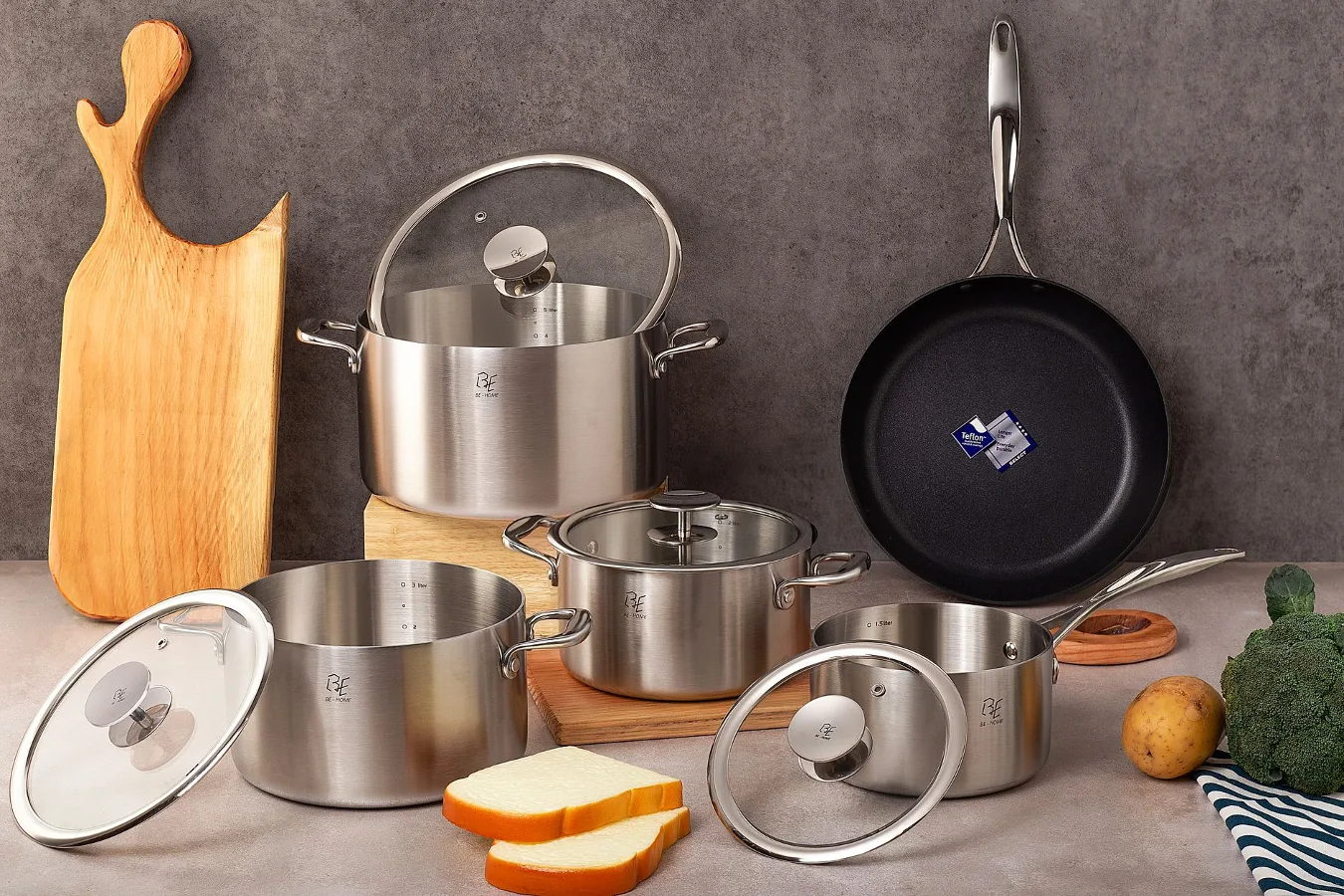
Quick answer: what PTFE-free non-stick cookware is
PTFE-free non-stick cookware is cookware that does not use PTFE, the polymer commonly associated with traditional non-stick coatings. Most people shopping in this category are looking for pans that release food easily while avoiding that specific coating material.
In practice, that usually means one of a few alternatives: ceramic nonstick coatings, hard-anodized cookware with a nonstick surface, enameled cookware for some uses, or other specialty coatings marketed as PTFE-free. The right choice depends less on the label and more on how you cook, how gently you care for your pans, and how long you expect the non-stick performance to last. guide to ceramic nonstick cookware offers more detail on this point.
The biggest misconception is that all PTFE-free cookware behaves the same. It does not. Some options are designed for easy eggs and pancakes, while others are better at browning, durability, or versatility. A pan that is easier to clean may not be the most durable, and a tougher surface may not be as slick.
How PTFE-free cookware compares
If you are comparing PTFE-free non-stick cookware, focus on the coating type and the base material together. Those two parts shape cooking performance more than the marketing phrase on the box.
Ceramic nonstick
Ceramic nonstick is one of the most common PTFE-free options. It is often chosen for easy release and a smooth cooking surface. For delicate foods such as eggs, fish, and crepes, it can be very convenient.
The trade-off is that ceramic nonstick often has a shorter useful life than more durable cookware surfaces if it is overheated, scrubbed aggressively, or used with metal utensils. It may still be a practical choice, but it usually rewards careful use.
Hard-anodized cookware with nonstick coating
Hard-anodized aluminum is valued for even heating and a sturdy feel. When paired with a PTFE-free coating, it can offer a more balanced experience than lightweight pans that flex or heat unevenly.
This is often a good middle-ground option for home cooks who want a pan that feels more substantial without moving to fully clad stainless steel. The main question is whether the coating itself is designed to last under your cooking habits.
Enameled cookware
Enameled cookware is not the same as classic nonstick, but it can release food reasonably well in certain situations. It is better thought of as a versatile surface rather than a true egg-pan replacement.
It tends to shine for braises, sauces, and baked dishes. If your goal is only to make eggs slide around easily, this may not be the most practical option. If you want something that handles both stovetop and oven use, it can be worth considering.
Stainless steel and other non-coated alternatives
Some shoppers search for PTFE-free non-stick cookware but really want cookware that is easier to use than raw stainless steel. Uncoated stainless steel is not non-stick, but it can be an excellent alternative for cooks who are willing to learn heat control and preheating.
This matters because not every buyer needs a coated pan. If your main concern is avoiding coatings altogether, a learning curve may be the better trade-off for durability and broad cooking versatility.
| Option | Best for | Main trade-off |
|---|---|---|
| Ceramic nonstick | Eggs, pancakes, quick cleanup | Can lose slickness faster with heavy use |
| Hard-anodized PTFE-free coated pans | Everyday stovetop cooking | Performance depends on the coating quality |
| Enameled cookware | Braising, simmering, oven-friendly dishes | Not a true non-stick surface |
| Stainless steel | Browning, searing, long-term durability | Requires technique to avoid sticking |
What to compare before buying
For this category, the best purchase decision usually comes from comparing a few practical details rather than relying on the phrase PTFE-free alone.
Cooking style
Start with what you make most often. If you cook eggs, crepes, or tender fish, release matters a lot. If you mainly sauté vegetables, simmer sauces, or sear proteins, durability and heat response may matter more than a super slick surface.
Many buyers overestimate how much non-stick they need. A pan that is slightly less slippery but more responsive and durable can be more useful over time.
Heat tolerance
PTFE-free coatings still have practical limits. Even without PTFE, high heat can shorten the life of many non-stick surfaces. If you often cook over strong heat, check whether the pan is meant for that style of cooking or is better reserved for low to medium heat. best pans for low-oil cooking offers more detail on this point.
A common mistake is choosing a PTFE-free pan for “safer” use and then treating it like a cast iron skillet. That usually leads to premature wear.
Base material and weight
The pan’s body affects how evenly it heats and how comfortable it feels in the hand. Aluminum-based pans tend to heat quickly, while heavier constructions may feel more stable and less likely to warp.
Weight matters more than many shoppers expect. A very lightweight pan can be easy to lift but may heat less evenly. A very heavy pan can feel more premium but may be awkward for daily use.
Handle comfort and balance
Handles are easy to overlook online. Yet if a pan feels awkward when full, you may avoid using it. Look for a shape and balance that match your grip and storage setup, especially if you move cookware from stovetop to oven.
Compatibility with your cooktop
Induction compatibility is a real sorting factor in the United States. Not all PTFE-free pans work on induction, especially if the base is not magnetic. If you cook on induction, confirm compatibility before buying rather than assuming it will work.
Maintenance expectations
Some PTFE-free surfaces need gentle cleaning, soft utensils, and avoidance of aerosol sprays or abrasive pads. If you want the easiest maintenance possible, choose a pan whose care requirements match your habits, not just your ideal habits.
Why people choose PTFE-free non-stick cookware
People usually look for PTFE-free non-stick cookware for a combination of reasons: ingredient or material preferences, desire for a different cooking feel, or a wish to simplify kitchen choices. Those are valid motivations, but they do not automatically make one material better than another. red cookware sets offers more detail on this point.
The advantage is mostly about choosing a surface that aligns with your comfort level and cooking style. For some kitchens, that means a ceramic nonstick skillet for weekday eggs. For others, it means stainless steel for durability and a separate PTFE-free pan for delicate foods.
Another benefit is variety. PTFE-free cookware opens the door to different combinations of heat retention, appearance, oven use, and cleanup style. That can be useful if you want a more layered cookware setup instead of one pan for everything.
Common limitations to expect
PTFE-free does not automatically mean maintenance-free or indestructible. That is where many shoppers get disappointed.
Here are the limitations worth planning for:
- Less forgiving surfaces: many PTFE-free coatings still need careful heat control and gentle utensils.
- Shorter slickness window: some surfaces feel excellent at first and gradually become less non-stick with normal use.
- Variable results by brand: performance can differ widely even within the same category.
- Not ideal for every task: a pan that excels at eggs may not be the best for deep searing or heavy browning.
This is why a realistic buying approach matters. PTFE-free cookware is often best viewed as one tool in a broader kitchen setup, not a universal replacement for every pan.
Mistakes to avoid
A few predictable mistakes can make PTFE-free cookware seem worse than it really is.
Choosing based on label alone
Some shoppers focus only on “PTFE-free” and ignore the actual construction. That can lead to a pan that looks appealing but heats unevenly, feels flimsy, or does not match the cooktop.
Using high heat by default
Many non-stick surfaces perform best with moderate heat. If you routinely crank the burner to the highest setting, you may burn off the benefits of a slick coating and reduce its life.
Assuming all cleaning tools are safe
Abrasive pads, harsh cleaners, and sharp utensils can shorten the life of PTFE-free surfaces. Even when a coating is marketed as durable, it is still wise to treat it as a finish, not a workbench.
Expecting one pan to do everything
Trying to use a PTFE-free nonstick pan for every task is a common disappointment. Delicate release, browning, oven work, and long simmering are not always served best by the same cookware.
Best-fit use cases
PTFE-free non-stick cookware tends to make the most sense in a few real-world situations.
- Weekday breakfasts: eggs, omelets, pancakes, and French toast benefit from an easy-release surface.
- Quick sautéing: vegetables and lean proteins can be cooked with less sticking when the pan is properly preheated.
- Mixed kitchens: households that want both coated and uncoated cookware often use PTFE-free pans for delicate jobs and stainless steel for the rest.
- Simple cleanup routines: some cooks prefer a pan that wipes out easily after a low- to medium-heat meal.
If you mainly cook sticky sauces, heavy searing, or recipes that demand very high heat, a PTFE-free nonstick pan may be a secondary tool rather than your main skillet.
Practical alternatives if you are still undecided
If you are not sure PTFE-free non-stick cookware is the right fit, compare it with a few alternatives before buying.
Cast iron is better for heat retention, browning, and durability, but it needs seasoning and more upkeep. Carbon steel offers a lighter feel with similar benefits, though it also requires care. Stainless steel is the most versatile for many cooks once technique is learned. Traditional PTFE non-stick remains a practical option for some kitchens, especially when easy release is the top priority and care instructions are followed carefully.
The best choice is usually the one that fits your cooking habits consistently, not the one that sounds best in theory.
FAQ
Is PTFE-free non-stick cookware the same as ceramic cookware?
Not always. Ceramic nonstick is a common PTFE-free option, but PTFE-free cookware can also include other coating systems or materials. Always check the actual construction, not just the marketing term.
Is PTFE-free cookware better than traditional non-stick?
Better depends on what you value. PTFE-free cookware may suit people who want different materials, but traditional non-stick can still be a practical choice for easy release and simple cleanup.
Can PTFE-free non-stick cookware go in the oven?
Sometimes, but the oven limit depends on the handle, lid, coating, and base material. Look at the manufacturer’s care instructions before assuming oven use is safe.
How do I make PTFE-free non-stick cookware last longer?
Use moderate heat, avoid metal utensils unless the manufacturer says otherwise, skip abrasive pads, and store pans so the cooking surface is not scraped by other cookware.
What is the easiest PTFE-free option for beginners?
For many people, ceramic nonstick or a coated hard-anodized pan is the easiest starting point. The best choice still depends on whether you care more about slickness, durability, or induction compatibility.
Choosing the right PTFE-free pan for your kitchen
If you want PTFE-free non-stick cookware that feels worthwhile over time, match the pan to the job. Prioritize cooking style, heat tolerance, cooktop compatibility, and care requirements before color or marketing claims.
A thoughtful purchase often looks less exciting than a trend-driven one, but it tends to work better in daily life. For many kitchens, the smartest setup is a PTFE-free non-stick pan for delicate foods, plus a more durable pan for everything that needs higher heat or stronger browning.