
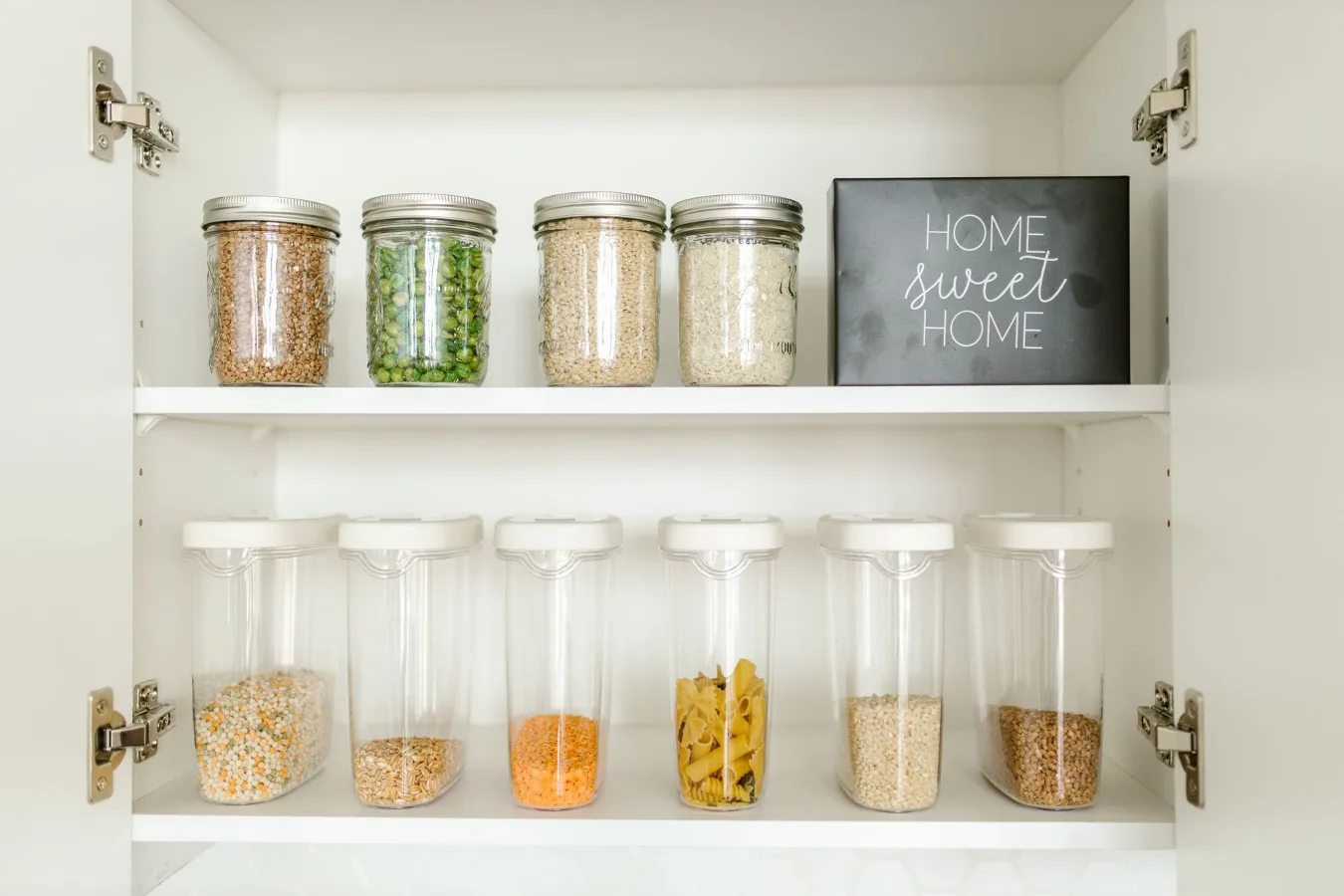
Long-term food storage containers are designed to protect dry goods from the four things that shorten shelf life fastest: moisture, air, light, and pests. The best option depends on what you are storing, how long you want it to keep, and whether the containers need to fit a pantry, basement, garage, or emergency supply setup. how to organize a pantry for long-term storage offers more detail on this point. Tea Storage Containers: What to Look For offers more detail on this point. choosing airtight containers for dry goods offers more detail on this point.
For most households, the right container is not one single product. It is usually a system: airtight containers for everyday pantry use, moisture-resistant packaging for bulk staples, and pest-resistant bins or buckets for backup supplies. Choosing well matters because the container often affects freshness as much as the food itself.
What makes a container suitable for long-term storage
Not every kitchen container is built for extended storage. A container can look sturdy and still fail at the details that matter over time, especially seal quality and material compatibility.
The most important factors are:
- Airtight closure to reduce exposure to oxygen and humidity.
- Food-safe material so the container is appropriate for edible items.
- Moisture resistance to help protect dry goods in changing conditions.
- Pest resistance to make access harder for insects and rodents.
- Light protection for ingredients that degrade faster in clear containers.
- Practical size so you can rotate stock without constantly opening large bins.
A common misconception is that any container labeled “airtight” is automatically suitable for long-term food storage. In practice, the lid design, gasket quality, and fit of the closure matter just as much as the label. A poor seal can still admit air and humidity over time.
Start with what you are storing
The right container depends heavily on the type of food. Dry staples, baking ingredients, and emergency supplies all have slightly different needs.
Rice, beans, oats, and grains
These staples usually benefit from containers that reduce air exposure and keep out moisture and insects. For larger quantities, many people use a layered approach: an inner barrier such as a mylar bag, plus an outer bucket or bin for structure and pest resistance.
If you rotate these foods regularly, a smaller airtight bin may be more convenient than a very large container. The easier it is to access and refill, the more likely you are to maintain an organized stock.
Flour, sugar, and baking mixes
These ingredients clump easily when exposed to humidity. For that reason, containers with reliable sealing lids are usually a better choice than open bins or decorative jars. Clear containers can be helpful for quick identification, but they may not be ideal if the pantry gets a lot of light.
For flour, one overlooked issue is access frequency. If you bake often, a medium-size container that is easy to scoop from may be more practical than a large bulk tub that is difficult to handle on a daily basis.
Emergency food and backup supplies
Emergency storage tends to favor durability and space efficiency. Stackable buckets, sealed bins, and barrier packaging are often chosen because they protect contents during long periods of inactivity and are easier to store in closets, utility rooms, or garages.
For foods intended to sit untouched for extended periods, container integrity matters more than convenience. The lid, closure method, and resistance to pests should carry more weight than appearance.
Material choices: what works and what to avoid
Materials influence durability, food safety, visibility, weight, and how well the container handles repeated opening and closing.
| Material | Common strengths | Potential limitations |
|---|---|---|
| Food-grade plastic | Lightweight, affordable, easy to stack, widely available | Can scratch, stain, or absorb odors over time; quality varies |
| Glass | Does not absorb odors, easy to inspect contents, useful for pantry display | Heavy, breakable, less practical for bulk storage |
| Metal | Durable, opaque, can block light | Not all metal containers are equally suitable for direct food contact; weight and denting can be issues |
| Mylar liners with buckets | Strong moisture and oxygen barrier when used correctly | Less convenient for frequent access; requires careful sealing and storage planning |
Food-grade plastic is often the most flexible option for home use, especially if the containers will be opened regularly. Glass is useful for shorter rotations or ingredients you want to keep visible. Bucket-based systems are better when the priority is long-term protection rather than daily convenience.
One practical nuance: opaque containers can help protect some foods from light, but they also make inventory harder to manage. If you choose opaque storage, labeling becomes essential.
Seal quality matters more than style
Containers are often marketed by shape, color, or stackability, but the seal is what keeps stored food protected. A lid that closes easily is not always a lid that stays protective over time.
Look for:
- Gasketed lids if you need a tighter seal.
- Latch or clamp mechanisms that create even pressure.
- Screw-top closures for some bulk storage applications.
- Simple lids that seat firmly without warping.
If you live in a humid area, or if your storage location experiences temperature swings, the quality of the closure becomes even more important. A container that performs well in a stable pantry may not be a good choice for a garage or basement.
Another overlooked consideration is repeated use. Some containers seal well when new but gradually loosen with wear, especially if the lid flexes, the gasket shifts, or the rim gets nicked. For long-term storage, durability over time is part of the seal story.
Choose capacity based on rotation, not just maximum volume
Large containers seem efficient, but oversized storage can create avoidable problems. If you need to open a giant bin often, you expose more food to air and increase the odds of spills, contamination, and pest access.
A better approach is to match container size to how you actually use the food:
- Daily-use items work best in smaller or medium containers.
- Bulk backup supplies can live in larger sealed bins or buckets.
- Rarely used emergency foods may belong in the most protective packaging available.
For many homes, mixed sizing works better than uniform bins. Small containers improve convenience in the kitchen, while larger secondary storage protects reserve stock in a closet or utility space.
Stackability and footprint can make or break your system
Long-term storage is not just about preservation. It is also about fitting a system into real space. Stackable containers are valuable when shelving depth is limited or when you need to group ingredients by type.
Before buying, consider:
- How the container fits on your shelves.
- Whether the lid supports safe stacking.
- Whether the shape wastes space in corners or narrow cabinets.
- Whether you can remove one container without disturbing the others.
Square and rectangular containers generally use space more efficiently than round ones. Round containers can be easier to scoop from in some cases, but they often leave unused gaps on shelves. The best choice depends on whether your priority is accessibility or storage density.
Location changes the kind of container you need
Where you store food affects how much protection the container must provide. A climate-controlled pantry is a very different environment from a garage or basement.
Pantry or kitchen cabinet
For a pantry, convenience and visibility usually matter most. Clear or semi-clear airtight containers are often practical because they make it easier to monitor stock and keep ingredients organized.
Basement or utility space
In cooler, less consistent spaces, moisture resistance and pest resistance become more important. Containers with stronger closures, thicker walls, or protective outer buckets often make more sense.
Garage storage
Garage storage is usually the least forgiving environment because of temperature swings and humidity. Food here should be stored with extra caution, and only if the space is clean, dry, and appropriate for edible goods. If conditions are unstable, a more protected indoor location is the safer choice.
A key decision-making insight: the same container can be excellent in a pantry and mediocre in a garage. Evaluate the storage environment before you evaluate the brand or style.
Convenience features that matter in real life
Small design details can make a storage system easier to maintain. That matters because even a good container becomes less effective if it is annoying to use.
- Wide openings help with scooping and refilling.
- Clear measurement marks can be useful for baking staples.
- Handles improve portability for heavier items.
- Uniform shapes help with stacking and shelf organization.
- Label-friendly surfaces make rotation easier.
Labels deserve more attention than they usually get. A reliable label with the food name, purchase date, and rotation date makes it easier to avoid confusion, especially when several similar containers sit side by side.
Common mistakes to avoid
Many storage problems come from a few avoidable habits rather than from the container itself.
- Using decorative containers for long storage without checking the seal.
- Mixing old and new stock without tracking dates.
- Storing food before it is fully dry, which can trap moisture.
- Overfilling containers so the lid cannot close correctly.
- Ignoring pest pathways around shelving, baseboards, or gaps.
- Keeping food in unstable environments where heat and humidity fluctuate widely.
Another common mistake is assuming clear containers are always best. Visibility is useful, but for some dry goods, light protection and seal performance matter more than having a quick visual check.
Practical container strategies by use case
Different households need different storage systems. The most effective setup is usually the one that matches your habits.
For everyday pantry organization
Choose airtight, easy-to-clean containers that are sized for regular use. Prioritize stackability, clear labeling, and simple handling. This works well for cereals, grains, flour, sugar, pasta, and snacks that are frequently replenished.
For bulk shopping
Use larger containers only when you can realistically rotate the contents. If the food will be used slowly, consider splitting it into smaller portions so you do not expose the entire supply each time you open it.
For emergency preparedness
Use the most protective method that still fits your storage space and rotation plan. For many dry staples, that means barrier packaging inside a sturdy outer container. The goal is long-term stability, not daily convenience.
For small kitchens
Look for tall, narrow, stackable containers that maximize vertical space. If cabinet depth is limited, container shape matters as much as capacity. A slightly smaller bin that fits cleanly may be more useful than a larger one that wastes space.
How to decide which container type is right
If you are choosing long-term food storage containers, start with a simple question: do you need daily access or extended protection?
Choose a clear, airtight container if you want easy visibility and frequent access in a pantry setting.
Choose a bucket or sealed bin if you need better protection for bulk staples or backup supplies.
Choose mylar plus an outer container if the food is meant for more serious long-term storage and you want an extra layer of moisture and oxygen protection.
Choose glass if you value visibility, odor resistance, and short-to-medium term pantry use more than bulk capacity or portability.
The best system often combines more than one type. That is not a compromise; it is usually the most practical approach. Daily-use items belong in convenient containers. Reserve stock belongs in more protective packaging.
What matters most before you buy
Before adding any container to your cart, check these basics:
- Is it food-safe for the type of food you plan to store?
- Does the lid create a dependable seal?
- Will the material work in your storage location?
- Is the size appropriate for your rotation habits?
- Can you stack or organize it without wasting space?
- Will you still want to use it after repeated opening and closing?
That short checklist usually leads to better decisions than focusing on appearance or promotional language. Long-term storage works best when the container matches both the food and the environment.
If you are building a pantry system from scratch, start with the foods you use most often and the storage conditions you actually have. From there, expand to more protective options for bulk ingredients and emergency reserves. The right container is the one that keeps food protected while remaining simple enough to maintain over time.