
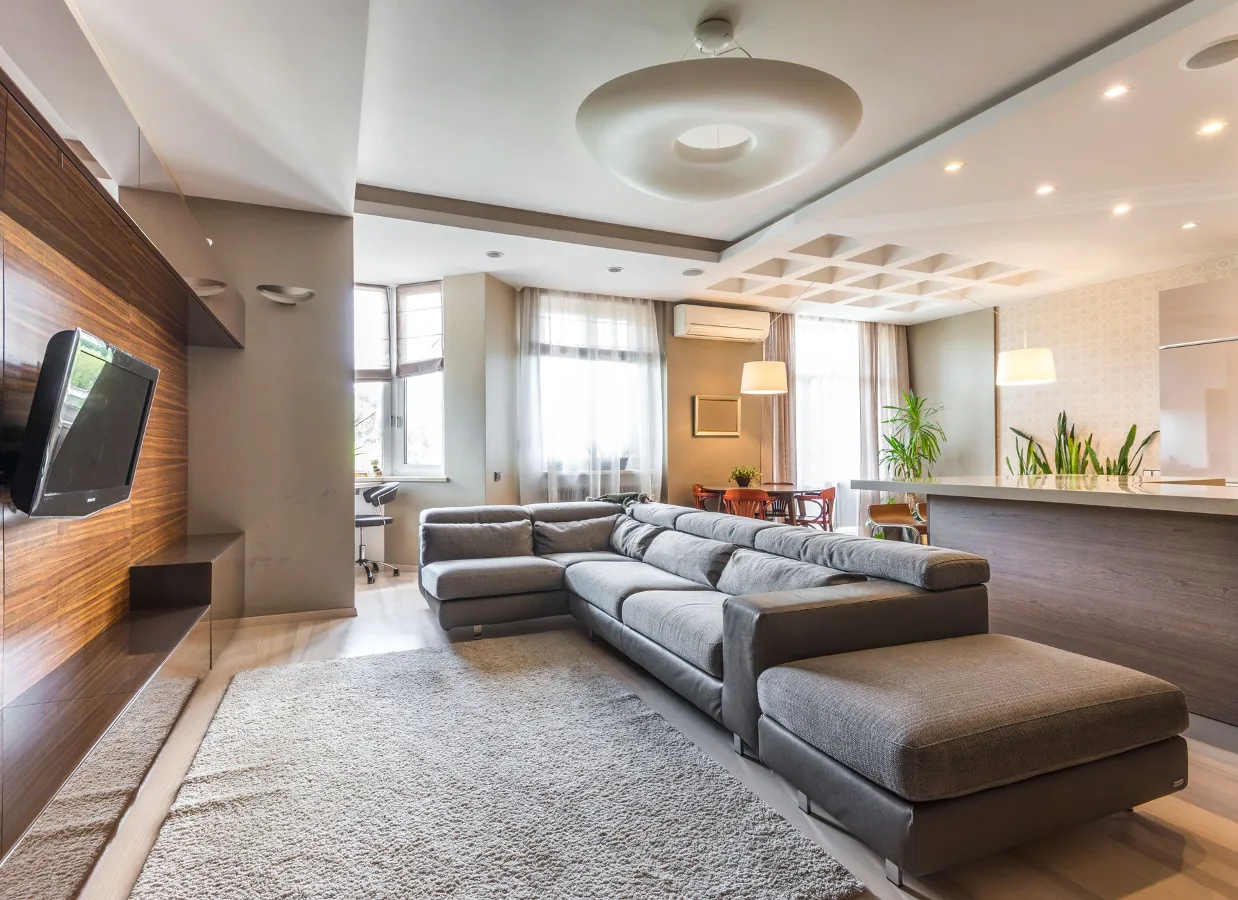
A high back sectional sofa is best for buyers who want more upper-back support, a sense of enclosure, and a room anchor that feels more substantial than a low-profile sectional. It can be especially appealing in open-plan homes, family rooms, and larger living spaces where the sofa needs to do more than just provide seating. The trade-off is that a taller back can make a room feel visually heavier, so the right choice depends on layout, ceiling height, and how you use the space. chenille sectional sofa offers more detail on this point. sectional sofa size and layout tips offers more detail on this point. chesterfield sectional sofa offers more detail on this point.
If you are shopping for one, focus less on the label and more on how the sectional actually functions in your room. Back height, seat depth, configuration, upholstery, and scale all matter. A high back sectional can be a strong fit for lounging, conversation, and TV viewing, but only if it suits the room’s proportions and your daily habits.
What a high back sectional changes in a room
The main appeal of a high back sectional is support. A taller backrest can feel more comfortable for people who want their shoulders and upper back supported while sitting upright, and it often helps the sofa feel more defined in a large room. That can be useful in open-concept spaces where furniture must visually separate the living area from a dining area or kitchen.
It can also help a sectional look more grounded. Low-back sectionals often feel airy and contemporary, but they can leave taller users feeling less supported. A higher back creates a more enclosed seating experience, which some households prefer for everyday use.
At the same time, height changes the visual weight of the piece. A tall sofa back can dominate a small room or interrupt sightlines in a space that already feels tight. That does not make it a bad choice, but it does mean scale matters more than with many other seating styles.
Key factors to compare before buying
Back height and actual support
Do not assume a higher back automatically means better comfort. The angle of the back, the firmness of the cushions, and the seat depth all affect how supportive the sofa feels. A very tall back with a reclined posture may still leave some people reaching for throw pillows, while a slightly shorter but better-shaped back may feel more natural.
For most shoppers, the question is not just how high the back is, but whether it supports the way the sofa will be used. If the sectional is for casual lounging, a deeper seat and softer back may work well. If it is for long conversations, reading, or more upright sitting, look for a shape that supports the spine without forcing you to sit too deeply.
Sectional layout and room flow
The configuration matters just as much as the back height. L-shaped sectionals often work well in corners or along two walls, while U-shaped sectionals can create a more enclosed, social seating zone. A high back can amplify that zoning effect, which is useful in large rooms but potentially overwhelming in smaller ones.
Think about traffic paths. A sectional should not block the natural route through the room, and the tallest parts of the back should not crowd doorways, windows, vents, or nearby shelving. In open layouts, the back may be visible from several angles, so the finished look matters more than it would for a sofa pushed against a wall.
Seat depth and sit style
Seat depth is one of the most overlooked details in sectional shopping. A deep seat can feel luxurious for lounging, but it may be too relaxed for people who prefer a more upright posture. When paired with a high back, a deep seat can create a sink-in feel that some users love and others find impractical for everyday use.
If multiple people will use the sofa, try to balance comfort preferences rather than optimizing for one person alone. Families often do better with a medium-depth seat that allows both relaxed and upright sitting. For homes where the sectional will serve as the main TV spot, a deeper seat may be worth the compromise.
Frame and cushion structure
The frame affects long-term value, stability, and how well the sectional keeps its shape. A high back can add visual size, but it should still feel sturdy rather than top-heavy. Cushion construction also matters because loose or low-density cushions can flatten over time, changing how the back and seat feel together.
Pay attention to how the upholstery is attached, whether the back cushions are fixed or loose, and whether the sectional uses removable covers. These details influence maintenance and durability more than surface style alone.
Upholstery choice
Fabric choice should match the realities of the household, not just the color palette. Performance fabrics are often practical in busy homes because they are designed with easier care in mind, though the exact upkeep still depends on the textile. Leather can be a strong option for a polished look and relatively simple surface cleaning, but it also has its own care needs and may show wear patterns differently over time.
For homes with kids, pets, or frequent entertaining, texture and cleanability matter. A high back sectional takes up a lot of visual space, so the upholstery will strongly influence the room’s overall feel. A matte woven fabric reads differently from a smooth leather finish, even if the silhouette is similar.
Scale and proportion
High backs are often best in rooms with enough vertical and horizontal breathing room. If the sectional sits beneath artwork, shelving, or windows, check how the taller back affects the composition. A sofa that is too tall for the room can make the ceiling feel lower and the space feel compressed.
Width matters too. A high back sectional can appear even larger than its dimensions suggest because the eye reads it as a solid block. That is why measuring the footprint alone is not enough. Consider sightlines, nearby furniture, and whether the sofa will dominate the room visually.
Practical ways to decide whether it fits your home
A useful starting point is to ask what problem the sofa needs to solve. If your current seating feels too low, too shallow, or too exposed in an open-plan room, a high back sectional may solve all three at once. If the room already feels crowded or your style leans light and minimal, a taller sectional may introduce more visual mass than you want.
For apartment living or smaller homes, a high back sectional can still work if the rest of the room is restrained. Keep surrounding pieces lighter in profile, choose leggy tables where possible, and avoid stacking too many bulky furniture forms together. The sectional can be the largest object in the room, but it should not be the only shape the eye notices.
For large family rooms, the decision is often easier. A high back sectional can create a destination seating area and make the room feel more intentional. In those spaces, the challenge is usually not fit but balance. The sofa should coordinate with coffee tables, rugs, lighting, and storage so the room feels composed rather than oversized.
Comfort trade-offs to think through
A higher back often improves support, but it can reduce the open, relaxed look some homeowners want. That visual trade-off matters in design-sensitive spaces. A sofa that feels wonderful to sit in may still be wrong for a room that needs visual lightness.
There is also a practical trade-off between upright support and lounging softness. Some high back sectionals are designed for sitting more formally, while others are built for sinking in. Neither is inherently better. The right choice depends on whether your household prioritizes reading, conversation, watching television, or casual napping.
Another nuance is access and movement. Taller backs can make it a little harder to reach wall art, outlet covers, or accessories positioned behind the sofa. If you often rearrange decor, use a console table, or need access to window treatments, that extra height may matter more than expected.
Common mistakes shoppers make
- Buying for style alone. A sofa that looks elegant online may feel too tall, too deep, or too enclosed in person.
- Ignoring room proportions. High backs can overwhelm smaller rooms or low ceilings if the scale is not carefully balanced.
- Overlooking seat depth. A supportive back does not fix a seat that is too deep or too shallow for the household.
- Forgetting traffic flow. Sectionals that look fine on paper can still block daily movement through the room.
- Choosing the wrong upholstery. A beautiful fabric may not be practical for pets, kids, or frequent use.
- Skipping measurement of doorways and delivery paths. A large sectional is only useful if it can actually get into the room.
When a high back sectional is the better choice
This style makes the most sense for households that want stronger upper-body support, a more enclosed seating feel, or a sectional that visually anchors a large space. It is also a good match for rooms where the sofa needs to define the living area within a broader open layout.
If your priorities include long TV sessions, family gatherings, or seating that feels more supportive than casual lounge furniture, a high back sectional can be a smart option. It is especially practical when paired with the right seat depth and an upholstery choice that suits your lifestyle.
It may also be the better choice if you find many modern low-back sectionals too relaxed. Some buyers assume lower profiles automatically look more sophisticated, but comfort and room fit often matter more than trend. A sofa that supports daily use well will usually age better in a home than one chosen only for appearance.
When another sectional style may work better
If your room is compact, has low ceilings, or already contains several large furniture pieces, a lower-profile sectional may feel easier to live with. It can preserve sightlines and help the room feel more open.
If you want a more formal look, a tailored sofa with moderate back height may strike a better balance between support and visual lightness. And if flexibility matters most, a modular sectional can offer more layout options than a fixed configuration, especially in changing households or multipurpose rooms.
For spaces where the sectional must sit close to windows or under wall decor, a lower back can also simplify the room layout. The best choice is often the one that solves the most problems without creating new ones.
How to narrow the choice confidently
- Measure the room first. Include walking paths, windows, outlets, and nearby furniture.
- Decide how you sit. Upright support, lounging, and mixed-use seating all point to different shapes.
- Match the back height to the room. Tall backs suit larger spaces better than compact ones.
- Compare seat depth with real use. Comfort changes a lot depending on how your household actually sits.
- Choose upholstery for maintenance, not just appearance. Daily life should guide the fabric choice.
- Think about visual weight. The sofa should fit the room’s proportions as well as its floorplan.
Decision guidance
If you want a sectional that feels supportive, enclosed, and substantial, a high back sectional sofa is worth serious consideration. It tends to suit larger rooms, open-plan layouts, and households that value comfort more than a light visual profile.
If your space is smaller or your style is more minimal, the same height that improves support can also make the room feel crowded. In that case, a lower or mid-back sectional may offer a better balance. The right answer is rarely about one feature alone. It comes from matching height, depth, upholstery, and scale to the room and the people using it.
For many shoppers, the smartest approach is to treat the back height as one part of a larger seating decision. A high back sectional can be an excellent choice, but only when it works with the room instead of competing with it.