
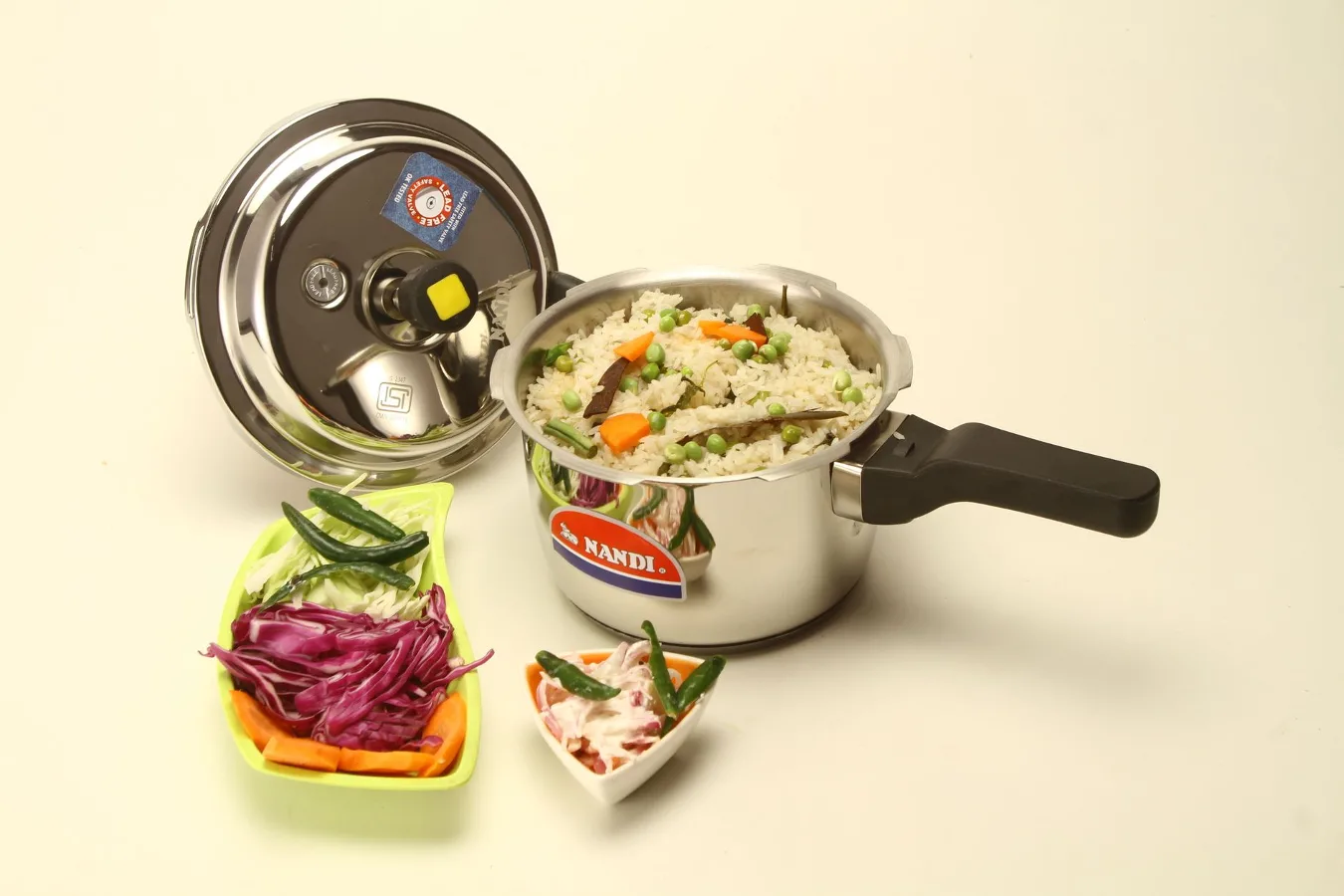
A commercial rice cooker is the right choice when rice needs to come out consistently, stay presentable during service, and require less hands-on attention than stovetop methods. For restaurants, cafeterias, caterers, and other foodservice operations, the real question is not just whether a cooker can make rice, but whether it fits the kitchen’s volume, workflow, and holding expectations.
The best model is usually the one that matches your batch size, menu style, and staffing pattern. A simple commercial rice cooker may be easier to use and clean, while a more advanced unit may suit kitchens that need repeatable results across different rice varieties or tighter quality control. The trade-off is usually between simplicity, flexibility, and cost.
When a commercial rice cooker matters most
Commercial rice cookers matter most in kitchens where rice is a recurring menu item rather than an occasional side. That includes Asian restaurants, fast-casual concepts, cafeterias, catering operations, ghost kitchens, and any operation that prepares rice in repeated batches throughout the day.
They are especially useful when staff changes are frequent or prep time is tight. A cooker can reduce the need to watch a pot, stir manually, or adjust heat during cooking. That kind of consistency is valuable in busy kitchens, but only if the model is sized and selected for the job.
They are less compelling if rice is rare on the menu or if the kitchen only needs very small amounts. In those cases, a standard countertop rice cooker or even stovetop batch method may be more practical. The mistake many buyers make is overestimating how much capacity they need, then ending up with a unit that is bulky, slow to clean, or awkward for their actual service volume.
Start with the job, not the appliance
The most useful way to shop for a commercial rice cooker is to work backward from how the kitchen will use it. A model that seems impressive on paper may be a poor fit if the operation only needs occasional batches, limited holding time, or a small prep footprint.
1. Match capacity to service pattern
Capacity is the first filter, but it should be considered in the context of real service. A restaurant that needs several smaller batches during lunch rush has different needs from a cafeteria that cooks once and holds rice for service. Large capacity can reduce the number of cycles, but oversized equipment may also create waste if rice sits too long or if portions are hard to control.
Ask whether the cooker will be used for one large batch, multiple smaller batches, or continuous rotation. Also consider whether the kitchen prefers to cook ahead or cook closer to service. This affects not only size, but how important keep-warm performance becomes.
2. Decide how much control the kitchen needs
Some commercial rice cookers are deliberately straightforward, with few controls and a focus on repeatability. Others offer more flexibility for different grains, soak times, or texture preferences. More control can be helpful, but it also raises the learning curve and the chance of inconsistent use across staff. learn more about maple cutting board offers more detail on this point. Titanium Cutting Boards Made in USA offers more detail on this point.
If the kitchen wants predictable results with minimal training, simplicity is often an advantage. If the menu includes different rice types or service styles, more adjustable features may be worth the added complexity. The key is to avoid paying for settings the staff will not use.
3. Consider the rice varieties on the menu
White rice is not the same as brown rice, jasmine, sushi rice, or mixed-grain blends. Some cookers handle variety better than others, especially if the kitchen expects subtle texture differences from batch to batch. A unit that is excellent for one style may not be as adaptable for another.
For kitchens with a narrow menu, a simpler appliance can be enough. For broader menus, it helps to think about whether the cooker needs to support multiple rice types without requiring constant adjustment.
What actually affects day-to-day results
Commercial buyers often focus on capacity first, but daily performance usually depends on a smaller set of practical details: the inner pot, the heating method, the keep-warm function, and how easy the unit is to clean.
Heating style and consistency
Different cooking systems can affect how evenly rice heats and how forgiving the machine is when batches vary. A straightforward on-off commercial unit may be ideal for kitchens that value reliability and simple operation. More advanced heating systems may offer better control, but they also tend to matter more when the kitchen is very particular about texture or uses a wide range of rice types.
The important question is not which technology sounds most advanced, but which one aligns with the kitchen’s standard operating procedure. If the team needs fast, repeatable output more than experimentation, straightforward controls often make more sense.
Inner pot materials and cleanup
The liner or inner pot affects both durability and cleanup. Nonstick surfaces can make washing easier and reduce residue buildup, but they require careful handling to avoid scratches. Stainless steel can be a more rugged choice in some environments, though cleanup may take more effort depending on how rice behaves during service. stainless steel knife set offers more detail on this point.
This is an overlooked decision point because it influences maintenance more than many shoppers expect. A liner that is slightly easier to cook with but harder to clean can become a daily frustration in a busy kitchen.
Keep-warm behavior
Many commercial rice cookers are valued as much for holding rice as for cooking it. That makes keep-warm behavior a major factor. The goal is not simply to keep rice hot, but to keep it usable and presentable during service without letting it dry out, compact, or develop an off texture.
Different kitchens will tolerate different holding windows depending on menu rhythm, volume, and local food safety practices. For that reason, buyers should look closely at whether the cooker is meant primarily for immediate service, short holding, or extended holding. A strong keep-warm function is useful, but it is not a substitute for good batch planning.
Step-by-step criteria for choosing the right model
- Define the daily rice volume. Estimate how much rice the kitchen actually serves on a busy day, not just an average one. Build around peak demand, then decide whether one batch or multiple batches is the better operational fit.
- Map the service window. Determine how long rice needs to stay ready before it is served. A cooker used for short prep-to-service windows has different requirements from one used for long holding.
- Check the staff workflow. If the team is stretched thin, choose a model that is simple to load, start, and clean. The more complicated the controls, the more important training becomes.
- Think about cleaning frequency. Some kitchens clean appliances multiple times a day. In that setting, removable parts and easy-access surfaces matter as much as cooking performance.
- Match the cooker to the menu. If the operation uses only one or two rice styles, a basic model may be enough. If the menu is broader, flexibility becomes more valuable.
- Evaluate space and storage. Countertop footprint, cord placement, lid clearance, and where the unit will be stored all affect usability. A cooker that fits the menu but not the station can still be a bad purchase.
Examples of how different kitchens might think about it
Fast-casual restaurant
A fast-casual concept often benefits from a cooker that is easy to train on and reliable under repeat use. If rice is part of a bowl program or a regular side, consistency and quick turnaround matter more than elaborate controls. Easy cleanup is also important because the unit may be cycled often.
Cafeteria or institutional kitchen
In cafeterias, rice is often produced in larger quantities and held for a service period. That puts more emphasis on capacity, even heating, and stable holding. The best fit is usually a unit that supports predictable batch production without creating a bottleneck during meal service.
Catering operation
Caterers need portability, reliability, and an appliance that can support prep around event timing. A commercial rice cooker may be useful here, but only if it is easy to transport, reset, and clean between jobs. Overly complex units can slow down a catering team that needs repeatable results in different locations.
Small restaurant with limited space
Smaller kitchens often benefit from a simpler unit with a modest footprint and a straightforward learning curve. In these spaces, the practical challenge is not just cooking rice, but fitting the appliance into a crowded workflow without creating extra clutter.
Common mistakes buyers make
- Choosing capacity by guesswork. Oversizing can be just as problematic as undersizing if rice quality declines during holding or if cleanup becomes cumbersome.
- Ignoring cleanup time. A cooker that is easy to use but annoying to wash can create more work than expected, especially in high-turnover kitchens.
- Overvaluing extra features. Settings that sound useful may never be used in daily service. Simple controls can be the better business decision.
- Forgetting about texture preferences. A model that makes acceptable rice is not always one that matches the menu style the kitchen wants.
- Assuming keep-warm is unlimited. Holding functions are helpful, but they do not remove the need to plan production around service timing.
- Overlooking staff habits. If the team is not trained on the same procedure, even a good appliance can produce inconsistent results.
Short checklist before you buy
- Does the capacity match peak demand, not just average demand?
- Will the cooker be used for one batch or repeated batches?
- Does the kitchen need simple operation or more control?
- Is the liner easy to clean and durable enough for the workflow?
- Will the keep-warm function support service without hurting rice texture?
- Does the appliance fit the available counter space and storage plan?
- Are staff likely to use the controls correctly without extensive training?
- Does the unit fit the rice types and menu style the kitchen actually serves?
Useful alternatives when a commercial model is not the best fit
A commercial rice cooker is not always the right answer. A high-capacity countertop rice cooker may be enough for a café, test kitchen, or small operation with light rice volume. For kitchens that only serve rice occasionally, stovetop methods may be more flexible and less expensive to maintain.
Some operations may also benefit more from rice warmers, steamers, or multi-use cooking equipment depending on the menu and space. The best choice is the one that solves the kitchen’s actual problem. If the issue is holding and presentation, a warmer may be more practical than a larger cooker. If the issue is batch consistency, a dedicated rice cooker often makes more sense.
What separates a good fit from a poor one
A strong commercial rice cooker choice usually comes down to alignment: the right volume, the right level of control, the right cleanup burden, and the right holding behavior. The most expensive option is not automatically the best, and the largest unit is not automatically the most efficient.
The better question is whether the appliance supports the kitchen’s pace without creating extra work. If it saves labor, produces repeatable rice, and fits the actual service rhythm, it can earn its place quickly. If it adds complexity or sits oversized for the menu, it will feel like a compromise from the start.
For readers comparing options across the Kitchen cluster, a commercial rice cooker sits in the same decision space as other countertop workhorses: practical, repetitive, and judged less by features than by whether it makes service easier every day.