
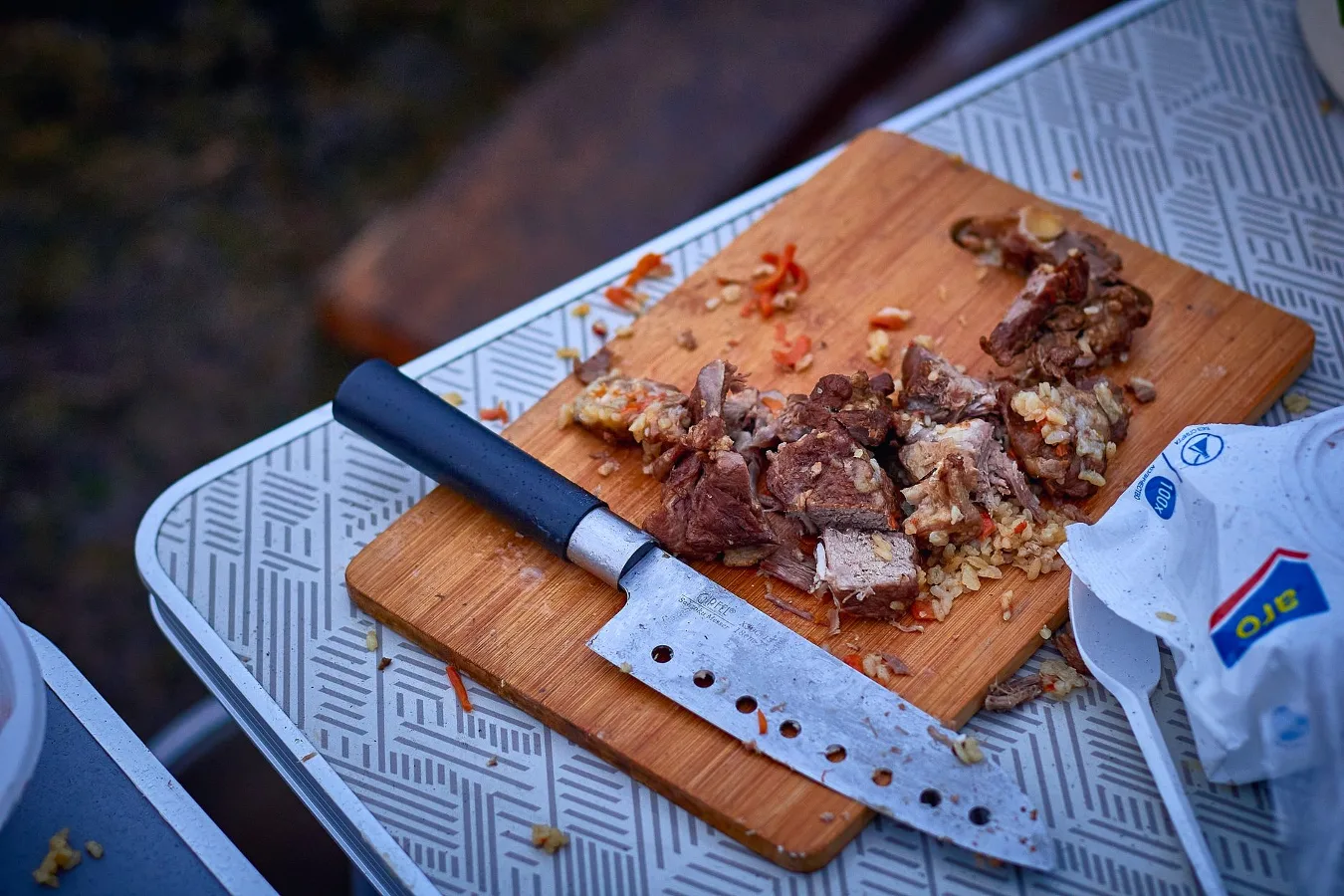
A BBQ knife set is a practical buy for anyone who regularly slices brisket, trims meat, or serves large cuts at the table. The best set is not just about having more knives; it is about having the right blade shapes, comfortable handles, and materials that hold up to frequent use and cleaning.
For barbecue, the most useful knife set usually centers on a carving or slicing knife, a chef’s knife for prep work, and often a boning or utility knife for trimming. Some sets add a fork, sharpening steel, or block, but those extras matter less than whether the knives feel balanced and cut cleanly through cooked meat without tearing it. cutting boards that work with sharp knives offers more detail on this point.
What a BBQ knife set should do well
Barbecue puts a knife set through a different kind of work than ordinary weeknight cooking. A good set needs to handle long slices of brisket, neat portions of pork shoulder, and trimming tasks before the meat ever hits the smoker or grill.
The most important goal is controlled cutting. For barbecue, that means a blade that can glide through bark, fat, and tender meat with minimal sawing. A knife that crushes or drags can ruin the presentation and make serving more difficult.
There is also a practical difference between prep knives and serving knives. A set that works well for both gives you more flexibility, but many buyers overlook the fact that one all-purpose knife rarely does every barbecue task equally well.
Buyer scenario: who this kind of set suits
A BBQ knife set makes the most sense if you cook for family gatherings, tailgates, backyard parties, or holiday meals where large cuts are common. It is especially useful if you regularly prepare brisket, ribs, pork butt, tri-tip, or whole chickens and want one coordinated set instead of piecing together separate knives.
It also suits cooks who want a cleaner carving setup at the serving board. A dedicated slicing knife looks and feels more appropriate for barbecue than using a random chef’s knife from the drawer. That matters when you want a smoother workflow at the grill or table.
If you only occasionally grill burgers or chicken breasts, a full BBQ knife set may be more than you need. In that case, one good chef’s knife and one carving knife may be the smarter purchase.
Blade types that matter most
Slicing and carving knives
This is the centerpiece of most BBQ knife sets. A slicing or carving knife typically has a longer, narrower blade designed to make long, clean strokes through cooked meat. That shape helps preserve texture and keeps slices more uniform.
For brisket, a slicing knife is often the most valuable tool in the set. A narrow blade reduces friction, while enough length helps you make full cuts without a lot of back-and-forth motion. The key trade-off is that a longer knife may feel less nimble for smaller jobs.
Chef’s knives
A chef’s knife is the workhorse for trimming vegetables, breaking down ingredients, and handling prep before cooking. If your BBQ knife set includes one, make sure it is comfortable enough for prolonged use and not just included to fill out the count.
For many buyers, this knife determines whether the set feels genuinely useful or merely decorative. A good chef’s knife often ends up doing more day-to-day work than the specialized barbecue blade.
Boning or trimming knives
Boning knives are helpful for removing silverskin, trimming fat, and working around joints. They are more specialized than a chef’s knife and are especially useful if you buy whole cuts and do your own prep.
The limitation is that not every home cook needs one. If you buy pre-trimmed cuts, this knife may see occasional use rather than constant use. That is why some shoppers are better served by a simpler set with stronger core pieces.
Utility knives and smaller blades
Smaller knives can handle fruit, garnish, and light trimming, but they are not the stars of a barbecue set. They are useful only if they complement the main blades rather than duplicating them.
One common misconception is that more knife types automatically make a set better. In practice, barbecue users often benefit more from a few well-made knives than from a crowded block full of redundant blades.
Material and spec factors worth comparing
Blade material
For a BBQ knife set, blade material affects corrosion resistance, edge retention, and maintenance. Stainless steel is popular because it is easier to care for and better suited to humid kitchens, outdoor use, and frequent washing. Higher-carbon blades may offer strong cutting performance, but they can demand more careful drying and storage.
The right choice depends on how much maintenance you are willing to do. If you want lower-fuss cleanup after a long cookout, stainless steel is often the more practical path. If you do not mind more attentive care, a higher-carbon blade may appeal for its sharpening characteristics.
Blade shape and length
Longer blades are especially useful for brisket and other large cuts because they support smooth, full-length slices. Shorter blades can be easier to control for trimming and smaller tasks. Many buyers make the mistake of prioritizing one long slicing knife and ignoring whether the rest of the set actually fits their prep routine.
Shape matters as much as size. A very broad blade is not ideal for delicate carving, while an overly thin blade may feel less versatile for general prep. The best set balances precision with enough durability for everyday kitchen use.
Handle comfort and grip
Barbecue prep can involve long sessions, wet hands, greasy surfaces, and repeated cleaning. That makes handle comfort more important than many shoppers realize. A secure, ergonomic grip can reduce hand fatigue and improve control when slicing hot meat at the board.
Look for a handle that feels stable in different hand positions. Texture, weight balance, and the transition between handle and blade all affect control. A knife that feels fine for a quick test in the store may become tiring during an extended cook.
Balance and overall weight
Balance influences how the knife moves through food. A well-balanced knife can feel easier to guide and less tiring over time. Weight is more personal: some cooks prefer a lighter knife for cleaner slices, while others like a bit more heft for trimming and general prep.
There is no universal best option. The better question is whether the knife feels controlled in your hand, especially when making longer cuts through dense smoked meats.
Edge type and maintenance
Edge style changes how the knife performs. A straight edge tends to be favored for clean slicing, while a serrated edge can be useful for certain breads or tougher exteriors but is not always the best first choice for barbecue slicing. Many barbecue-focused users prefer smooth edges because they create neater slices on brisket and similar meats.
Maintenance matters too. Some sets are easier to sharpen than others, and some edges hold up better between sharpenings. If you do not already own sharpening tools or do not want a high-maintenance knife, this should influence your purchase.
What to prioritize by use case
For brisket-heavy cooks: prioritize a long slicing knife, a comfortable grip, and a blade that glides rather than tears. A carving fork can be useful, but the slicing knife does the most important work.
For mixed grilling and prep: choose a set with a dependable chef’s knife, a smaller utility or boning knife, and one carving blade. This mix covers more kitchen tasks without overcomplicating the set. how to choose kitchen knife materials offers more detail on this point.
For frequent outdoor serving: consider ease of cleanup, corrosion resistance, and storage. Knives that are easier to dry and protect may be more practical than more delicate options.
For gift buyers: a clean, well-rounded set with a few useful pieces is usually safer than a specialized bundle loaded with niche tools. The recipient can always add more specialized knives later.
Trade-offs to expect
Every BBQ knife set involves trade-offs. A set that focuses on slicing performance may be less versatile for vegetable prep. A more general kitchen set may work well for prep but feel less precise for carving large smoked meats. A beautiful block set may look impressive on the counter but require more cleaning effort and storage space.
Another trade-off is between convenience and maintenance. Easier-care materials and simpler blade construction often appeal to busy home cooks, but some premium-feeling knives may ask for more careful washing, drying, and sharpening. The best choice depends on whether you value low maintenance or more specialized performance.
Sets with too many pieces can also be misleading. Extra steak knives, kitchen shears, or specialty blades do not automatically improve barbecue performance. The real value lies in whether the core knives suit how you cook.
Common mistakes buyers make
- Choosing a set for looks instead of blade function.
- Buying too many specialty knives and not enough useful core pieces.
- Ignoring handle comfort, especially for long carving sessions.
- Overlooking maintenance needs such as drying, sharpening, and storage.
- Assuming one knife can replace a proper slicing knife for brisket.
- Forgetting that outdoor use can make corrosion resistance more important.
One overlooked consideration is storage. A barbecue knife that lives loosely in a drawer is more likely to dull or get damaged. If the set does not include safe storage, you may need a drawer tray, magnetic strip, or knife block to protect the edges.
Alternatives if a full set is not the right fit
If you do not want a full BBQ knife set, there are a few sensible alternatives. The simplest is to buy a single high-quality carving knife and pair it with an existing chef’s knife. That works well for many home cooks who only need one dedicated barbecue blade.
Another option is a small two-knife combination: one slicing knife and one prep knife. This keeps the purchase focused and often delivers better value than a larger bundle with redundant pieces.
For some households, a kitchen knife set already covers most needs, and a separate barbecue slicing knife fills the only real gap. That approach is often more efficient than replacing everything at once.
How to narrow down the right set
- Start with the cuts you cook most often. Brisket, pork shoulder, ribs, and tri-tip do not all call for the same blade profile.
- Decide whether you want a set mainly for carving, prep, or both.
- Check whether the handles feel secure and comfortable in hand.
- Look for materials that match your cleaning habits and storage setup.
- Prefer a focused set with useful core pieces over a large bundle of extras.
- Think about sharpening and long-term upkeep before you buy.
A practical approach usually beats chasing the biggest set. If you cook barbecue regularly, the best knife set is the one that improves slicing, trims cleanly, and is easy enough to maintain that you will actually keep using it.
Next steps for shoppers
Before choosing a BBQ knife set, compare the blade types first, then look at material, handle comfort, and storage. Those factors affect real use more than packaging or the number of included pieces. x acto knife set offers more detail on this point.
If you are still unsure, start by deciding whether your priority is brisket carving, general grilling prep, or a gift-ready kitchen set. That one choice will narrow the field faster than comparing every bundle side by side.
For most buyers, the smartest purchase is a set that covers slicing, prep, and basic trimming without adding unnecessary complexity. That balance gives you better everyday value and makes the set easier to live with long term.