
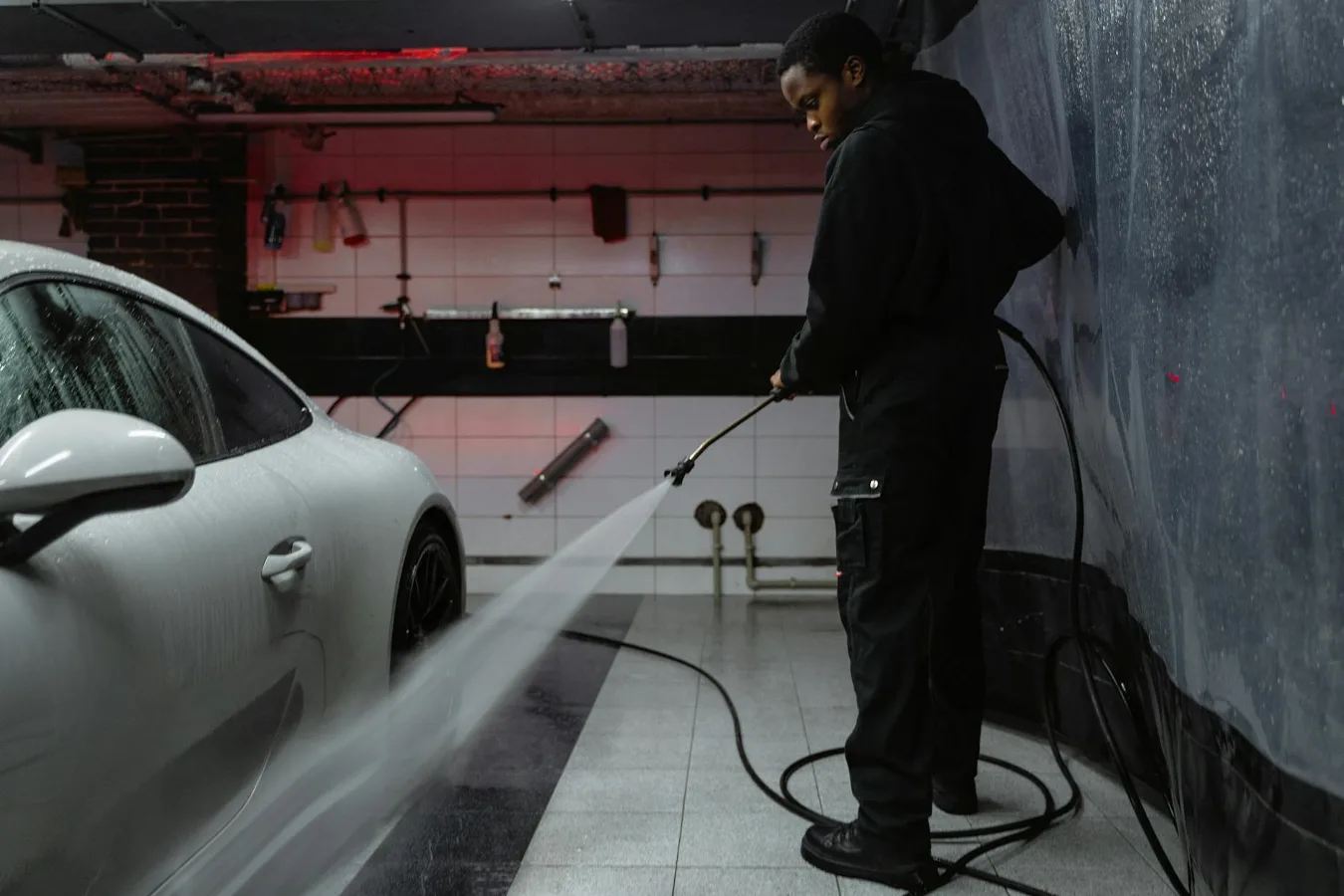
When a hot pressure washer makes sense
A hot pressure washer is the better choice when the job involves grease, oily residue, sticky build-up, or grime that clings to a surface instead of rinsing away. Heated water helps break down certain soils more effectively than cold water alone, which is why these machines are often associated with garages, equipment bays, commercial hardscapes, and other demanding cleaning tasks. hot water pressure washer offers more detail on this point.
For garden-related use, that usually means more than simple dirt removal. Think stained concrete near a workshop, a greasy patio cooking area, outdoor machinery, trash enclosures, or paved spaces where regular rinsing has stopped being enough. If the cleaning challenge is mostly dust, mud, pollen, or light algae, a cold-water pressure washer may already be sufficient. The heated option becomes compelling when time, residue type, and finish quality all matter. Garden guide offers more detail on this point.
The common misconception is that hotter water automatically solves every cleaning problem. It does not. Heat can improve cleaning efficiency, but the real result still depends on water pressure, flow, nozzle choice, detergent compatibility, dwell time, and the surface itself. A hot pressure washer is a tool for specific jobs, not a universal upgrade.
What to compare before you choose
Buying a hot pressure washer is less about chasing the highest number and more about matching the machine to the work you actually do. The best model for one buyer may be a poor fit for another because hot-water machines introduce practical trade-offs: more weight, more maintenance, more startup complexity, and a higher upfront commitment.
1. Cleaning target
Start with the mess you want to remove. Grease, oil, waxy residue, and embedded film respond differently than mud or leaf stains. If your main challenge is organic buildup on patios, fences, and garden furniture, you may not need heated water at all. If the job includes petroleum-based stains, vehicle runoff, or equipment cleaning, heat becomes much more valuable.
Also consider whether the surface is sealed, painted, composite, or concrete. Heated cleaning can speed up the process, but delicate materials may require a more cautious approach. Always think about the surface first, not just the stain.
2. Water temperature capability
Hot pressure washers vary in how they generate heat and how much control they offer. Some are designed for consistent heated cleaning, while others may offer only a limited temperature increase. Temperature matters because the real benefit of hot water is not just comfort; it changes how oils and grime release from surfaces.
Look for clear information about heat output, warm-up behavior, and whether the machine allows the temperature to be adjusted for lighter tasks. In many cases, control is more useful than maximum heat. Too much heat can be unnecessary, and on some materials it may be counterproductive.
3. Pressure and water flow working together
Pressure and flow are often discussed separately, but they work as a pair. Pressure helps lift contamination; flow helps flush it away. A machine with strong pressure but weak flow may struggle to clear loosened debris, while a machine with good flow but insufficient pressure may rinse well without deep cleaning.
For hot-water cleaning, this balance matters even more because heated water can loosen more material at once. If the machine cannot move that debris away efficiently, the result may be streaking, residue, or repeated passes. Think of the machine as a system, not a single specification.
4. Power source and portability
Hot pressure washers are typically more complex than cold-water units. That complexity can affect portability, storage, and setup. If you plan to move the machine between different parts of a property, or transport it between jobs, weight and footprint matter more than many buyers expect.
For a homeowner or garden-focused user, a large machine may be hard to justify if it lives in one corner of the garage and gets used only occasionally. For a property manager, maintenance team, or contractor, portability may be essential. The right choice depends on whether the machine needs to travel, sit stationary, or do both.
5. Detergent compatibility
Heat can enhance the effect of many cleaning agents, but only when the machine, hose, and nozzle setup are suitable for that use. Always check whether the washer is designed to work with detergents, and follow the manufacturer’s guidance rather than assuming stronger chemistry means better results.
This is an overlooked consideration for buyers focused only on water temperature. In practice, a good detergent matched to the right surface can make a bigger difference than extra heat alone. The best results usually come from combining moderate heat, appropriate detergent, and controlled pressure.
6. Maintenance expectations
A hot pressure washer usually asks more of its owner than a simpler cold-water model. That does not make it a bad purchase; it just means the ownership experience is different. More components generally mean more checks, more cleaning, and more attention to safe operation and storage.
Before buying, ask whether you are willing to keep up with fuel or power requirements, warm-up time, hose care, burner-related maintenance if applicable, and winter storage considerations. A machine that is easy to buy but inconvenient to maintain often ends up underused.
A practical decision path
If you are trying to decide quickly, this sequence helps separate genuine need from speculative upgrade buying.
- Identify the dominant soil type. If grease, oil, or sticky residue is common, a hot pressure washer moves higher on the list.
- Match the surface. Durable concrete and masonry are easier fits than painted trim, soft wood, or fragile finishes.
- Check how often you will use it. Frequent use justifies more complexity better than a once-in-a-while cleanup.
- Decide whether portability matters. Stationary use and transportable use call for different machine styles.
- Factor in detergents and attachments. The right accessories can make the system more versatile and reduce unnecessary heat.
- Think about storage and upkeep. If maintenance will be a burden, a simpler washer may be the smarter buy.
This approach keeps the purchase grounded in real use. Many shoppers start with features. Better buyers start with jobs.
Examples of where heated cleaning helps most
Not every outdoor cleaning task needs hot water, but some do benefit clearly from it.
- Garage and workshop floors: Useful for oil film, tire residue, and tracked-in grime.
- Outdoor cooking areas: Better for grease splatter and sticky residue around grills or prep counters.
- Equipment and machinery: Helpful where dirt combines with oils and lubricants.
- Driveway spots near vehicles: Useful for stains that regular rinsing barely touches.
- Trash and recycling zones: Good for residue and odors that cling to hard surfaces.
- Commercial-style hardscape cleaning: Appropriate where speed and soil removal matter more than gentle rinsing.
By contrast, hot water is usually less necessary for routine patio dust, light mud on pavers, and seasonal pollen wash-downs. In those cases, the extra cost and maintenance may not earn their keep.
What buyers often overlook
The biggest mistake is assuming a hotter machine always means a better result. Surface compatibility matters just as much as cleaning strength. Heat can accelerate cleaning, but it can also intensify risk on finishes that are already vulnerable.
Another common oversight is noise, setup time, and storage. A hot pressure washer may need a more deliberate operating routine than a basic electric cold-water unit. If the machine feels cumbersome, people stop using it for small jobs, which reduces its value over time.
A final nuance is water efficiency in practice. A faster clean can mean less time on the job, but only if the machine is matched to the task. An undersized washer may keep running longer, while an oversized one may be more than you need. The best choice is the one that cleans efficiently without adding unnecessary hassle.
Checklist before you buy
- Does your typical cleaning involve grease, oil, or sticky residue?
- Are the surfaces you plan to clean durable enough for heated pressure washing?
- Will you use the machine often enough to justify the added complexity?
- Do you need a stationary setup or portable equipment?
- Does the washer support the detergent approach you prefer?
- Are you comfortable with the maintenance and storage requirements?
- Do you have a clear reason to choose heat over a strong cold-water model?
If several answers are uncertain, pause before buying. In many garden and outdoor-cleaning scenarios, a good cold-water pressure washer paired with the right nozzle and detergent can cover more ground than buyers expect. A hot machine becomes the right investment when the cleaning problem is persistent, greasy, and time-sensitive.
How to think about alternatives
Sometimes the best answer is not a hot pressure washer at all. For lighter outdoor upkeep, a cold-water washer, a surface cleaner attachment, or a targeted degreaser may be the more practical route. These options are often simpler to store and easier to live with.
If your work is split between occasional patio cleaning and the occasional stubborn stain, a versatile cold-water setup may be the smarter long-term choice. If your cleaning tasks regularly involve oily contamination, then heated cleaning is easier to defend. The decision is less about status and more about what kind of dirt you remove most often.
For garden users in particular, the key is to avoid overbuying for a problem that does not exist. A hot pressure washer is a specialized tool. Used well, it can save time and improve results. Used casually, it can become an expensive piece of equipment with more capability than your actual cleanup routine requires.
Choosing with confidence
A hot pressure washer earns its place when the job is tough enough that water temperature changes the outcome. If you are dealing with grease, film, or stubborn residue on durable outdoor surfaces, it can be a practical upgrade. If your cleaning is mostly seasonal rinsing and light dirt removal, the added complexity may not pay off.
The smartest buyers look past the headline feature and judge the full setup: surface type, soil type, portability, maintenance, detergent use, and storage. That broader view leads to a machine that fits your work instead of simply looking powerful on paper.