
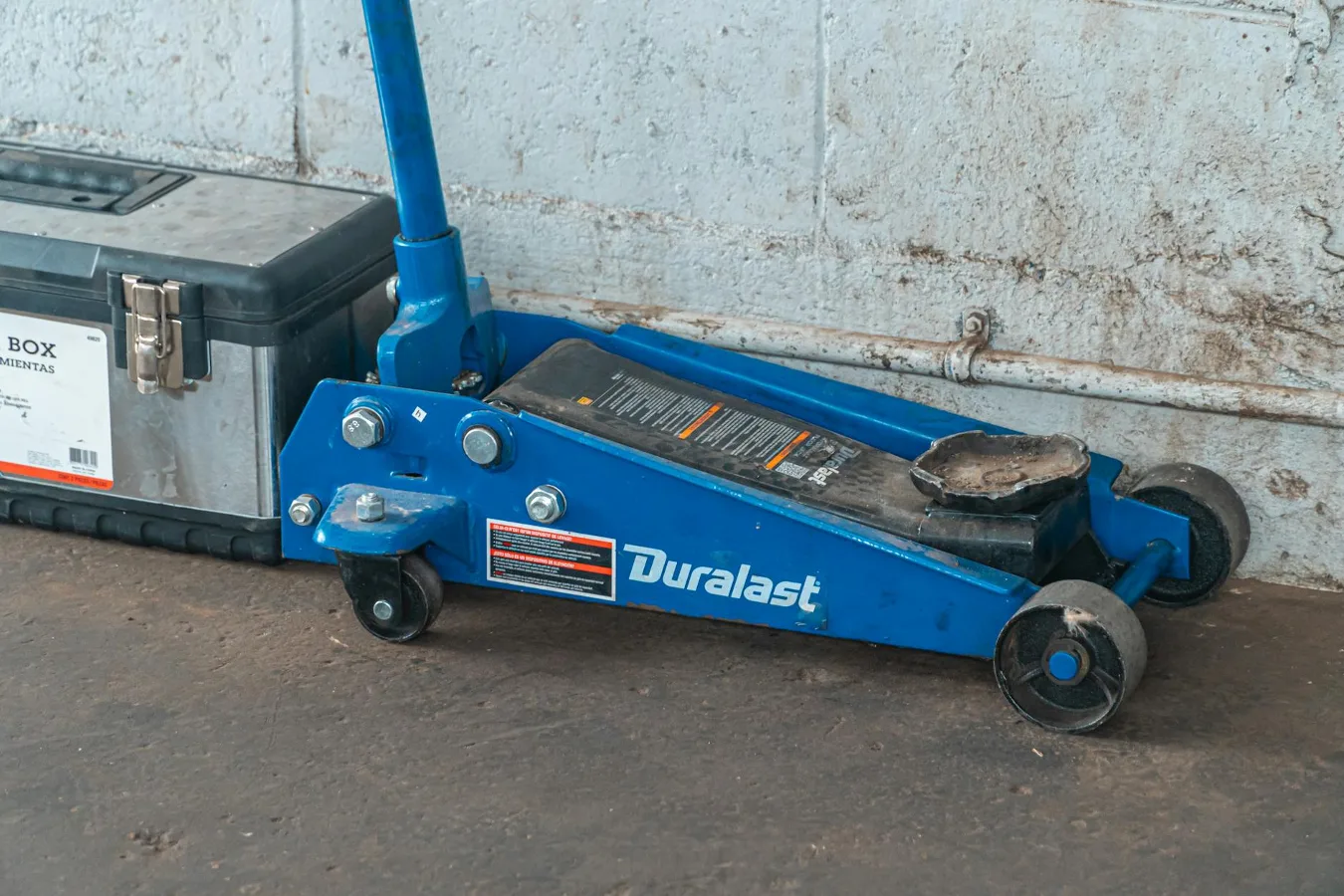
What a lawn mower jack lift is for
A lawn mower jack lift is a support tool used to raise a riding mower or lawn tractor so you can reach the underside of the deck, blades, belts, pulleys, and wheels more easily. For most homeowners, the main reason to use one is simple: maintenance is safer and less awkward when the mower is held at a controlled height instead of being propped up with makeshift blocks or leaned at an unsafe angle. tractor deck cleaning guide offers more detail on this point. High-Lift Lawn Mower Blades: Buyer’s Guide offers more detail on this point. Snapper Lawn Riding Mower Guide offers more detail on this point.
That said, not every mower needs the same type of lift. The right choice depends on your mower style, the amount of clearance you need, how often you maintain it, and how stable the machine feels while raised. A jack lift is less about convenience alone and more about creating a stable working position for routine tasks such as cleaning grass buildup, inspecting blades, or replacing worn parts.
For buyers comparing options, the key question is not just whether a lift can raise the mower. It is whether it can do so in a way that matches the mower’s weight, wheelbase, frame design, and service needs.
When a jack lift matters most
A mower jack lift becomes especially useful when you regularly do your own maintenance instead of taking the mower to a shop. It matters most for tasks that require access to the underside or front end of the machine.
- Blade changes and sharpening: A raised mower gives you room to remove, inspect, and reinstall blades more comfortably.
- Deck cleaning: Grass clippings and packed debris are easier to clear when you can safely reach the underside.
- Belt and pulley checks: Belts often require a better angle and more access than a simple crawl-under approach allows.
- Wheel and axle inspection: A lift can make it easier to look for wear, looseness, or debris around moving parts.
- Seasonal prep: Before storage or after heavy use, it helps with deeper cleaning and maintenance.
If your mower is light enough to service with a basic ramp or if you only do occasional top-side maintenance, a jack lift may feel optional. But for riding mowers and lawn tractors, especially larger ones, a proper lift can make routine care more practical and far less frustrating.
Step-by-step criteria for choosing the right lift
Instead of starting with price or brand, narrow your choice by how the lift will actually be used. That usually leads to a safer and more useful purchase.
1. Match the lift to the mower type
Start with the mower category. A lift that works well for a compact riding mower may not suit a heavier lawn tractor with a wider stance. Look at how the mower loads onto the lift, how the wheels sit, and whether the frame design gives the lift enough contact points to hold the machine securely.
One common misconception is that any mower jack lift is interchangeable. In practice, wheel spacing, front-end geometry, and deck size can affect fit and stability. If the mower sits awkwardly on the lift, the setup may be more inconvenient than useful.
2. Decide how much access you need
Some jobs only need the mower raised a bit for blade access, while others benefit from a higher service position. Think about whether you mainly need access to the cutting deck or whether you also want room to inspect belts, clean the underside thoroughly, or perform more involved repairs.
More lift can mean easier access, but it can also mean a larger footprint, more storage space, and potentially more effort to position correctly. Choose the least complicated tool that still gives you the access your mower tasks require.
3. Consider the lifting mechanism
Lawn mower jack lifts are commonly manual, hydraulic, or scissor-style. Each has a different feel and different trade-offs.
- Manual lifts: Often simpler and lighter, but may require more physical effort.
- Hydraulic lifts: Usually easier to raise smoothly, though they can add cost and weight.
- Scissor-style lifts: Can be compact and useful for controlled raising, but may take more setup time.
The best mechanism depends on how often you will use it and how comfortable you are with the setup. A lift that feels easy in theory can become annoying if it takes too much effort to position before every service session.
4. Look at stability before anything else
Stability matters more than appearance or extra features. A lift should hold the mower with minimal wobble and keep it positioned so the work area stays predictable. Wide support points, secure contact with the frame or wheels, and clear locking or holding features all matter.
This is the overlooked factor many buyers miss: a lift can seem sturdy on paper yet still feel awkward in use if it does not match the mower’s balance point. A stable setup is not only safer; it also makes repairs less stressful because you are not constantly adjusting the machine while trying to work.
5. Check clearance and garage fit
Before buying, think about where the lift will be used and stored. Some units fold or collapse, while others occupy more space and are better suited to a dedicated workshop or garage. If your storage area is tight, portability may matter more than maximum capacity.
Also consider the ceiling height and your own working posture. If the mower is lifted but you still have to crouch uncomfortably, the added access may not be as helpful as expected.
What the best setup looks like in real use
A good lawn mower jack lift setup does not end with the tool itself. The surrounding workspace plays a big role in safety and convenience.
For example, a level floor is far better than a sloped driveway. Solid ground helps reduce shifting and gives the lift a more predictable base. Lighting matters too, especially when you are checking blades, pulleys, or debris-packed areas under the deck. Gloves, eye protection, and the right hand tools should be within reach before you start lifting.
A realistic service routine often looks like this:
- Park the mower on a flat, stable surface.
- Turn off the engine and remove the key.
- Let hot components cool before handling them.
- Position the lift according to the mower’s frame or wheel layout.
- Raise the mower slowly and stop if anything shifts or feels uneven.
- Secure the mower according to the lift’s design before starting work.
- Complete the task without leaning on unstable parts of the machine.
The exact procedure depends on the lift and mower design, but the principle is always the same: raise slowly, confirm balance, and avoid improvising with unstable support.
Practical examples of use-case fit
Different users benefit from a lawn mower jack lift in different ways. A homeowner with a small riding mower may mainly want faster blade changes and easier cleaning. A property owner who maintains multiple mowers may care more about repeatability and time savings. Someone with limited lifting strength may prioritize a hydraulic or easier-to-position design over a lighter manual unit.
For occasional maintenance, a compact jack lift can be enough if it is easy to store and simple to set up. For regular seasonal service, a more stable and ergonomic design may be worth the extra size. For larger lawn tractors, the fit and support points should carry more weight in the decision than convenience alone.
That trade-off is worth keeping in mind: the most convenient lift on the shelf is not always the best one for your mower. The best one is the one that feels stable, fits your equipment, and makes the tasks you actually perform easier.
Common mistakes to avoid
Many mower lift problems come from setup errors rather than from the tool itself. A few habits are especially common.
- Using an uneven surface: This can affect balance and make the mower feel less secure.
- Choosing by price alone: A cheap lift that does not fit the mower well can be harder to use than no lift at all.
- Ignoring the mower’s weight and stance: Fit matters as much as strength rating or general design.
- Rushing the lift: Fast setup is tempting, but controlled movement is safer.
- Working without proper support: A raised mower should never be treated casually, especially when you are reaching under it.
- Assuming all maintenance tasks are the same: Blade work, belt inspection, and cleaning have different access needs.
Another common misconception is that a jack lift is only for professionals. In reality, many homeowners use one for routine maintenance, but only when they take the time to match the tool to the machine and follow the setup carefully.
Alternatives worth considering
A lawn mower jack lift is not the only way to improve access to the underside of a mower. Depending on the machine and your workspace, another option may be more practical.
- Service ramps: Useful when you need a simpler way to raise the mower, especially for rolling access.
- Floor jack and stands: Can work in some situations, but the mower’s shape and balance must make this a safe fit.
- Professional service: A better choice if you are uncomfortable lifting the mower or if the repair goes beyond routine maintenance.
The advantage of a dedicated mower lift is that it is built around mower service rather than general lifting. The trade-off is that it is another specialized tool to store and maintain. If you only do one or two simple tasks a year, a ramp may be enough. If you service the mower often, a jack lift usually makes more sense.
Quick checklist before you buy
Use this checklist to narrow your options without overcomplicating the decision.
- Does it fit your mower type and wheelbase?
- Will it give you enough access for the tasks you actually perform?
- Is the lifting method comfortable for your strength and routine?
- Does it appear stable on a level surface?
- Will it store easily in your garage or shed?
- Does the setup seem simple enough that you will actually use it?
- Does it reduce the risk of awkward positioning during maintenance?
If you can answer yes to most of those questions, the lift is more likely to be a practical addition rather than a piece of equipment that gathers dust.
The most useful way to think about a mower jack lift
A lawn mower jack lift is best treated as a maintenance tool, not just a convenience accessory. Its value comes from making regular service easier, safer, and more controlled. The right lift should fit the mower, support the tasks you actually do, and feel stable enough that you can work without second-guessing the setup.
For many homeowners, that means choosing the simplest lift that still provides secure access. If you maintain a riding mower or lawn tractor regularly, the time saved and the added comfort can justify the space and cost. If your mower is used lightly or only needs occasional attention, a less specialized option may be enough.
The real goal is not just to raise the mower. It is to create a safer, more practical way to keep the machine in good working condition.