
What restaurant food storage containers need to do
Restaurant food storage containers are not just bins for leftovers or prep ingredients. In a commercial kitchen, they help control food safety, support first-in, first-out rotation, protect ingredients from moisture and contamination, and keep service moving without unnecessary clutter. The best container depends on what you are storing, where it will be stored, and how often staff need to access it. commercial kitchen storage basics offers more detail on this point. long term food storage containers offers more detail on this point. how to organize dry storage areas offers more detail on this point.
A container that works well for dry pasta or flour may be a poor choice for marinated proteins, cut produce, or hot soup. That is why the right selection starts with use case, not shape alone.
If you are building out storage for a restaurant, café, catering operation, or ghost kitchen, it helps to think of containers as part of the workflow. The container should be easy to identify, easy to clean, compatible with shelving and refrigeration, and sturdy enough for repeated handling.
Start with the storage environment
One overlooked mistake is choosing containers before considering where they will live. Dry storage, walk-in coolers, reach-ins, prep tables, and transport each create different demands.
Dry storage
For dry goods, the main priorities are protection from pests, dust, and humidity. Clear containers can make ingredient identification faster, while opaque containers may be better for light-sensitive items. Tight-fitting lids matter here, especially if your storage area is exposed to fluctuating temperature or moisture.
Cold storage
In coolers and freezers, containers need to handle condensation, stacking, and frequent opening. Staff should still be able to read labels through frost or moisture. If containers will move between prep and cold storage, choose sizes that fit standard shelving and allow enough headspace for ingredients that expand or shift when chilled.
Prep and service areas
Containers used near the line should support speed and visibility. Clear sides, consistent sizing, and easy-access lids can reduce wasted time. For some stations, smaller portioned containers are more practical than a few large bins because they support turnover and reduce repeated exposure.
The main factors that matter most
Material
Material affects durability, visibility, weight, and suitability for specific foods. Common options include plastic, polypropylene, polycarbonate, stainless steel, and food-grade bins designed for bulk storage. Each has trade-offs.
- Plastic containers are lightweight and often cost-effective, but they can scratch, stain, or retain odors over time depending on the material and use.
- Polycarbonate containers are often chosen for clarity and durability, though they may not suit every application equally well.
- Polypropylene containers are commonly used in kitchens because they are practical, lightweight, and often suited to cold or general storage needs.
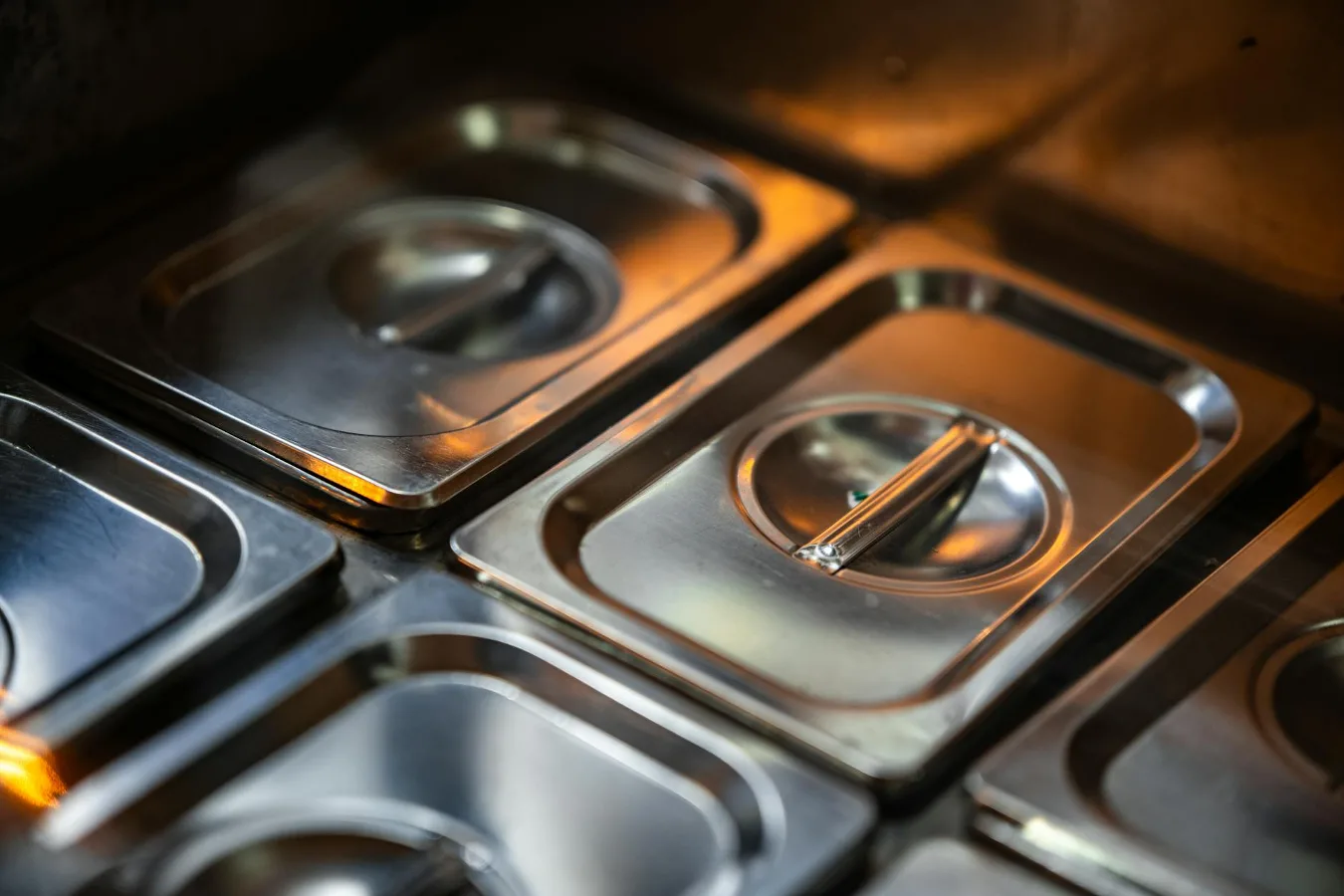
- Stainless steel containers offer a different set of advantages, including durability and a nonporous surface, but they do not provide visibility into contents.
The best material depends on whether visibility, toughness, temperature resistance, or cleanup efficiency matters most.
Size and capacity
Container size should match actual ingredient flow. Oversized containers can waste space and make rotation less precise. Undersized containers may force frequent refills, which increases handling and can slow service. Many operations benefit from a mix of sizes rather than a single standard container for everything.
Ask practical questions: does the container fit on the shelf without awkward overhang, can staff lift it safely when full, and does it match the amount of product used between prep cycles?
Lid style and seal quality
Lids are often treated as an afterthought, but they determine whether a container is truly useful. A lid that fits loosely may be fine for some dry items but a liability for liquids, odor-sensitive foods, or cold storage. Snap lids, hinged lids, and tight-seal covers each serve different needs.
For high-turnover kitchens, lids should be easy to remove and replace without slowing staff down. If a lid is difficult to clean or easy to misplace, it will create day-to-day friction.
Stackability and shelf fit
Space is always limited in restaurant storage. Stackable containers help reduce clutter, but stacking only works if the shape is stable and the lids are consistent. Before standardizing a container line, check that it fits your shelving depth, cooler height, and any bins or racks used for transport.
Oddly shaped containers can waste valuable inches, especially in small kitchens where storage density matters.
Visibility and labeling
Clear containers can speed up ingredient checks, but labeling is still essential. Contents, prep date, and discard date should be easy to read. A clear container without a disciplined labeling system can create more confusion than an opaque container with strong labeling habits.
This is one of the most common misconceptions: visibility alone does not equal organization. Good storage depends on both container design and a reliable labeling routine.
Cleaning and maintenance
In busy kitchens, the best container is the one staff can clean correctly and consistently. Smooth interior surfaces are easier to sanitize than textured or heavily ridged designs. If a container tends to trap residue in corners, it may slow dishroom operations or lead to shortcuts.
Pay attention to whether containers are easy to inspect for wear. Scratches, cloudiness, warped lids, and cracked corners are not just cosmetic issues; they can affect hygiene and usability.
Match the container to the food type
Different foods benefit from different container styles. A one-size-fits-all approach often creates avoidable waste.
- Dry ingredients such as flour, rice, sugar, and pasta often need sturdy bins with dependable lids and easy scooping access.
- Prepared sauces and liquids generally need secure closures and containers that reduce spills during transport and storage.
- Cut produce often benefits from clear, stackable containers that support fast identification and easy rotation.
- Proteins and marinated items may require containers that hold shape, resist leakage, and fit properly in cold storage.
- Portioned prep items usually work best in smaller containers that support line setup and reduce repeated opening.
For some operations, hotel pans, ingredient bins, and lidded prep tubs may be better than traditional round containers. The right choice depends less on the container’s popularity and more on how the food is handled through the shift.
Practical solutions for better storage organization
Create container categories by function
Instead of buying random containers as needs appear, group them by purpose: dry storage, cold prep, service line, transport, and overflow. This makes it easier to replace damaged items and maintain consistent sizing.
Consistency also helps staff know where each item belongs, which matters in kitchens with rotating teams.
Standardize a few sizes
A narrow set of container sizes can simplify stacking, labeling, and shelving. Standardization is especially useful in commercial kitchens with limited storage space. Too many shapes and sizes create dead space and make it harder to train staff on proper use.
Use the container to support rotation
Food storage works best when container design and inventory discipline support each other. Clear labels, date marking, and visible contents help staff follow rotation rules more consistently. The container should make the right behavior easier, not require extra effort to use correctly.
Keep transport needs in mind
If containers will move between prep tables, coolers, delivery vehicles, or off-site events, portability becomes important. Lighter containers may be easier to carry, but they also need enough structure to resist flexing or spilling. Secure lids and stable stacking matter more during transport than in static storage.
Common mistakes to avoid
- Choosing containers by price alone without considering durability or fit.
- Buying a single size for every task and then struggling with poor space use.
- Using clear containers without labels, which can create confusion during busy service.
- Ignoring lid quality until spills or odor transfer become a problem.
- Overlooking shelf dimensions and ending up with containers that waste vertical or horizontal space.
- Keeping damaged containers in circulation because they still “mostly work.”
A damaged or warped container may seem like a minor issue, but it can undermine stackability, hygiene, and workflow reliability.
How to choose between common container options
If you are deciding between styles, use the job the container must do as your filter.
- Choose clear containers if quick identification and inventory checks are a priority.
- Choose opaque containers if light exposure is a concern or if you rely heavily on labeling anyway.
- Choose rigid bins for bulk ingredients and stable storage.
- Choose smaller prep containers for high-turnover mise en place and line work.
- Choose stainless steel when durability and a nonporous surface are more important than visibility.
- Choose stack-friendly designs if storage space is tight and shelving efficiency matters.
There is no universal best option. A restaurant usually needs a mix, not a single perfect container.
What to look for before placing a large order
Before standardizing on one container line, test the practical basics against your operation’s needs:
- Will it fit the shelves, coolers, and prep stations you already use?
- Does the lid stay secure without being hard to remove?
- Can staff clean it easily and inspect it for wear?
- Does the size match typical batch volume and rotation frequency?
- Does the material suit the food, temperature, and handling conditions?
- Will labeling remain clear and legible in daily use?
If the answer to several of these is uncertain, buying in smaller quantities first is often the safer route.
FAQ
What are the best restaurant food storage containers for general use?
The best general-use option is usually the one that balances durability, visibility, size, and ease of cleaning for your kitchen’s workflow. For many restaurants, a mix of clear and sturdy lidded containers works better than relying on one style alone.
Are clear containers better than opaque ones?
Clear containers make it easier to identify contents quickly, but they are not automatically better. Opaque containers can be useful when light exposure or labeling discipline is a bigger concern. The right choice depends on how the container will be used.
How do I choose the right size?
Match the size to how quickly the food moves through prep and service. A container should be large enough to hold a practical batch, but not so large that product sits unused for too long or storage space is wasted.
What is the biggest mistake restaurants make with storage containers?
One of the biggest mistakes is focusing on container price instead of workflow fit. Poor lid performance, awkward sizing, and weak stackability can create more cost through waste and inefficiency than a slightly better container would have.
Should a restaurant use the same containers for all foods?
No. Different foods need different container features. Dry ingredients, liquids, prepared items, and cold storage all place different demands on material, lid style, and capacity.
Choosing containers that support the whole storage system
Restaurant food storage containers work best as part of a larger system that includes labeling, rotation, shelf organization, and cleaning routines. The right purchase is not just the container that looks most useful on paper. It is the one that fits the foods you store, the space you have, and the pace your kitchen actually runs.
For most operations, the smartest approach is to select a small set of dependable container types, standardize where possible, and leave room for specialized options where the menu demands them. That balance usually creates better organization than chasing a single universal solution.