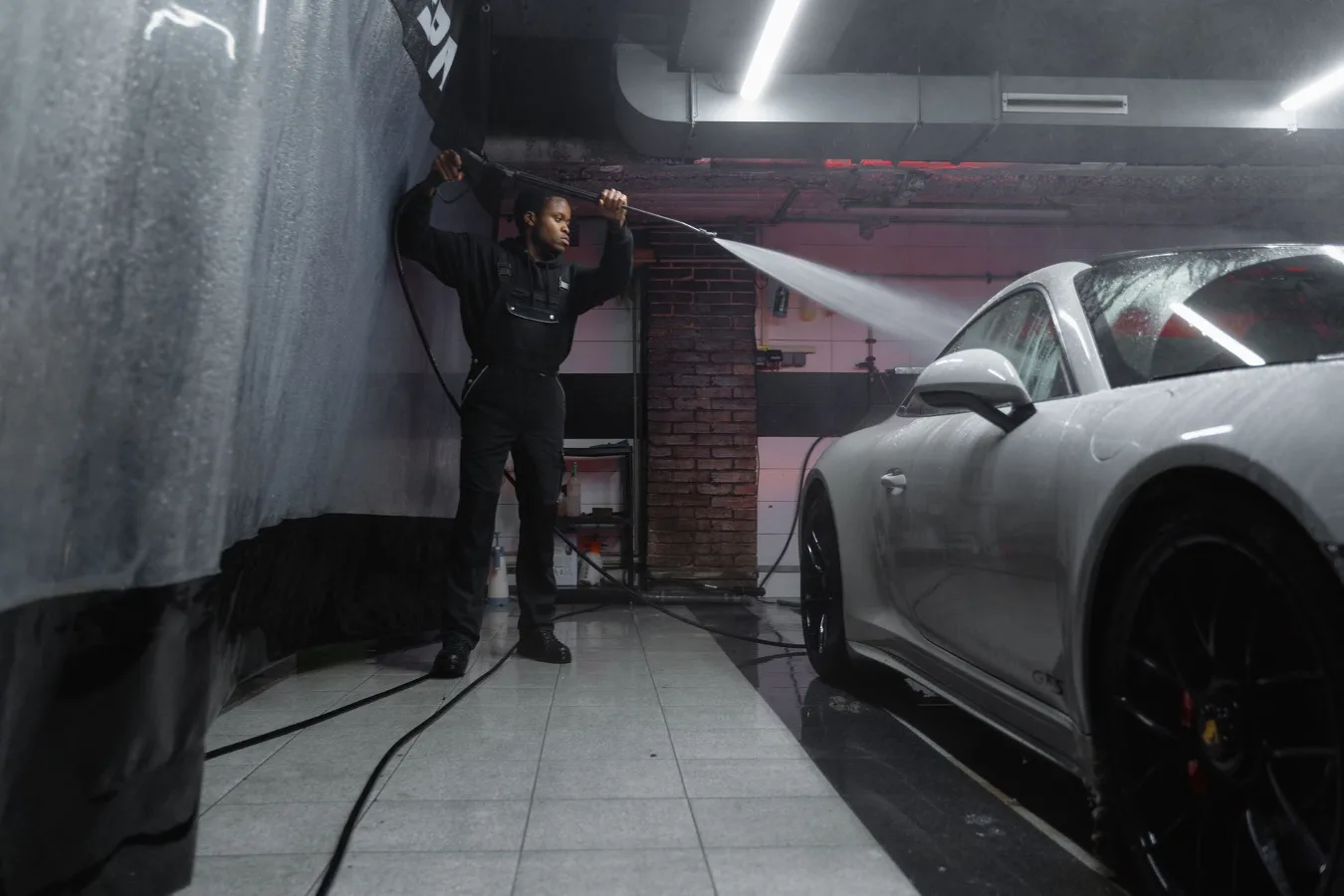
Commercial pressure washing services are professional exterior cleaning services used to remove dirt, oxidation, algae, mildew, gum, grease, and other buildup from business properties. For most commercial spaces, the real value is not just appearance. Proper cleaning can help preserve surfaces, reduce slip hazards, and support routine property maintenance. how to choose cleaning methods for outdoor surfaces offers more detail on this point.
The key is matching the cleaning method to the surface. Concrete parking areas, storefront sidewalks, loading docks, masonry, siding, signage, and exterior equipment all respond differently to pressure, heat, detergents, and rinsing techniques. That is why commercial pressure washing is less about blasting away grime and more about using the right process for the material, contamination level, and site conditions.
How commercial pressure washing services are typically used
Commercial pressure washing services are commonly used for recurring exterior upkeep and one-time restoration cleaning. Property managers, facility teams, retail operators, restaurants, industrial sites, multifamily communities, and office buildings often use these services to keep high-traffic areas presentable and functional. common pressure washing mistakes to avoid offers more detail on this point.
Common applications include:
- Sidewalk and entryway cleaning
- Parking lot and curb line washing
- Dumpster pad cleaning
- Drive-thru lane cleaning
- Storefront and facade washing
- Loading dock cleanup
- Graffiti removal
- Algae, mildew, and staining removal
- Concrete and masonry cleaning
- Fleet and equipment rinsing where appropriate
Some properties need regular maintenance cleanings to control buildup before it becomes difficult to remove. Others need targeted service after storms, renovation work, tenant turnover, or periods of heavy use. The right schedule depends on traffic, climate, surface type, and how visible the area is to customers or tenants.
What matters most when comparing providers
Price is only one part of the decision. For commercial properties, the more useful comparison is how a provider handles surfaces, safety, site protection, and scheduling around business operations.
Surface compatibility
Not every exterior material should be cleaned the same way. Concrete can often handle more aggressive cleaning than painted siding, EIFS, vinyl, sealed stone, wood, or older masonry. A good provider should identify which areas require high-pressure cleaning and which areas need soft washing or low-pressure application with detergents. pressure washing versus soft washing offers more detail on this point.
This distinction matters because too much pressure can etch concrete, strip paint, force water behind cladding, or damage seals and finishes. A surface-safe approach is usually more important than speed.
Cleaning method
Commercial pressure washing is a broad term. In practice, providers may use pressure washing, soft washing, hot water washing, surface cleaning equipment, or detergent-assisted rinsing. The method should match the job.
- Pressure washing is generally better for hard, durable surfaces such as concrete.
- Soft washing is better for more delicate surfaces, where low pressure and cleaning agents do the heavy lifting.
- Hot water washing may help with grease, oil, and some heavy organic buildup.
- Surface cleaners can produce more even results on flat concrete and reduce streaking compared with a wand alone.
A knowledgeable contractor should explain why a given method is recommended instead of treating every surface the same way.
Site protection and cleanup
Commercial cleaning should account for nearby landscaping, electrical equipment, doors, vents, signage, and pedestrian paths. Runoff management is especially important around drain systems, stormwater areas, and sensitive landscaping. Overspray can cause headaches if not controlled.
Look for a provider that discusses containment, water flow, rinse direction, and post-job cleanup. On an active property, the difference between a tidy service and a disruptive one often comes down to planning.
Scheduling and business disruption
For many businesses, the biggest operational issue is not the cleaning itself but how it affects customers, tenants, employees, and deliveries. Early morning, evening, or off-hours scheduling can reduce disruption. Large properties may need phased cleaning so entrances, loading areas, and parking sections remain partially usable.
A practical provider will help sequence the work rather than simply showing up and starting wherever is easiest.
Experience with your property type
A contractor that regularly handles restaurant pads may not be the best fit for a warehouse exterior or a shopping center. Different environments create different buildup patterns and safety concerns. Grease, chewing gum, mold, soot, dust, irrigation staining, and rust each call for different approaches.
Ask whether the provider understands the demands of your specific property type. Experience with similar sites can reduce avoidable mistakes and improve efficiency.
Where pressure washing adds real value
Commercial pressure washing is most valuable when it solves a recurring maintenance problem rather than serving as a cosmetic refresh alone. The strongest use cases usually involve visibility, safety, or preservation.
- Curb appeal: Clean entryways, sidewalks, and facades create a better first impression for customers, tenants, and visitors.
- Slip risk reduction: Build-up from algae, grease, and residue can make surfaces slick, especially in shaded or damp areas.
- Material preservation: Routine cleaning can help reduce the long-term impact of grime, pollutants, and organic growth.
- Operational cleanliness: Dumpster pads, loading areas, and service entrances often need targeted attention to stay sanitary and manageable.
- Lease and compliance support: Property upkeep can be part of landlord, tenant, or facility responsibilities depending on the site and contract structure.
One overlooked benefit is consistency. Many properties do not need a dramatic restoration clean; they need a repeatable maintenance plan that keeps buildup from becoming visible, slippery, or difficult to remove.
Common mistakes to avoid
Commercial pressure washing can create problems when the cleaning method is chosen too quickly or when the site is not evaluated carefully.
Using too much pressure on the wrong surface
This is one of the most common and costly errors. High pressure can damage painted surfaces, softer masonry, sealants, wood, stucco, and older materials. The right solution is not always stronger force. Often it is a different chemical, a different nozzle, lower pressure, or a soft wash process.
Ignoring runoff and drainage
Water, detergents, loosened debris, and grease need a planned path away from entrances, drains, and landscaped areas. If runoff is not considered, cleanup can spread the mess rather than remove it.
Cleaning without considering weather and drying time
Rain, wind, freezing conditions, and heavy foot traffic can affect results and safety. Even when the job itself is done correctly, poor timing can create track-in issues or lingering wet areas where people walk.
Choosing based on the lowest bid alone
Commercial exterior cleaning can seem interchangeable from the outside, but the details matter. A low bid may leave out site protection, specialized cleaning, aftercare, or the method needed for sensitive surfaces. That can create hidden costs later.
Assuming every stain can be removed the same way
Not all discoloration is dirt. Oxidation, rust, efflorescence, dye transfer, oil staining, and material wear may require different treatment or may not fully disappear. A careful provider should explain what can be improved, what may lighten, and what may remain visible.
Commercial pressure washing versus soft washing
Many commercial buyers search for pressure washing but actually need a mix of cleaning methods. The decision usually comes down to surface strength, buildup type, and risk tolerance.
| Method | Best for | Main advantage | Common limitation |
|---|---|---|---|
| Pressure washing | Concrete, pavers, curbs, hard exterior surfaces | Effective on durable surfaces and heavy grime | Can damage softer materials if used carelessly |
| Soft washing | Siding, roofs, painted surfaces, delicate exteriors | Lower risk to sensitive materials | May take longer and rely more on detergents |
| Hot water cleaning | Grease, oil, restaurant and service areas | Better at loosening stubborn oily residue | Not ideal for every surface or situation |
For many commercial properties, the best plan is not choosing one method forever. It is using the right method for each zone of the site. A parking lot may need one approach, while the building facade needs another.
Questions to ask before hiring a contractor
A few practical questions can reveal whether a provider is prepared for commercial work:
- What surfaces do you recommend cleaning, and which surfaces need a gentler approach?
- How do you protect landscaping, doors, drains, and adjacent equipment?
- How do you handle grease, gum, algae, mildew, or rust when those are present?
- What scheduling options do you offer to reduce disruption?
- Do you have experience with properties similar to ours?
- How do you handle runoff, rinsing, and post-job cleanup?
- What areas are likely to improve noticeably, and what stains may be more resistant?
These questions help separate a surface-level vendor from a provider that understands commercial property realities.
Alternatives and supporting maintenance methods
Pressure washing is not the only way to maintain an exterior. Depending on the surface and problem, alternatives may be more appropriate or may work alongside washing.
- Soft washing: Better for fragile materials and organic growth on buildings or roofs.
- Manual spot cleaning: Useful for localized stains, signage, and sensitive details.
- Degreasing treatments: Helpful in service bays, dumpsters, and food-related areas.
- Routine sweeping and debris removal: Reduces buildup before it becomes embedded.
- Sealants or protective coatings: Can help some surfaces resist future staining, depending on the material and use case.
A complete exterior maintenance plan often combines several of these approaches instead of relying on pressure washing alone.
Why a maintenance schedule usually works better than one-off cleanings
For commercial properties, exterior cleaning is easier to manage when it is part of a routine plan. Regular service can reduce the need for aggressive cleaning later, help keep customer-facing areas consistently presentable, and make budgeting simpler for property teams.
The right frequency depends on the property, weather exposure, traffic level, and local conditions. A shaded sidewalk near trees will not age the same way as a sun-exposed concrete pad. A restaurant entrance will not collect debris like an office park. The point is to base the schedule on actual site conditions rather than a generic calendar.
That is also where many businesses make a quiet mistake: waiting until buildup becomes obvious from a distance. By that point, cleaning may require more time, more labor, and a more intensive method than periodic maintenance would have needed.
Choosing the right fit for your property
The best commercial pressure washing services are the ones that solve the specific problem without creating new ones. For a business property, that usually means a contractor who understands surface sensitivity, runoff control, scheduling constraints, and the different needs of customer areas versus back-of-house spaces.
If you are evaluating options, focus on method, material compatibility, site protection, and communication. Those factors usually matter more than flashy promises. A well-planned exterior cleaning program can keep a commercial property cleaner, safer, and easier to manage over time, while a poor one can damage surfaces or create avoidable disruption.
In practice, the right service is the one that treats your property like a working environment, not just a set of dirty surfaces.