
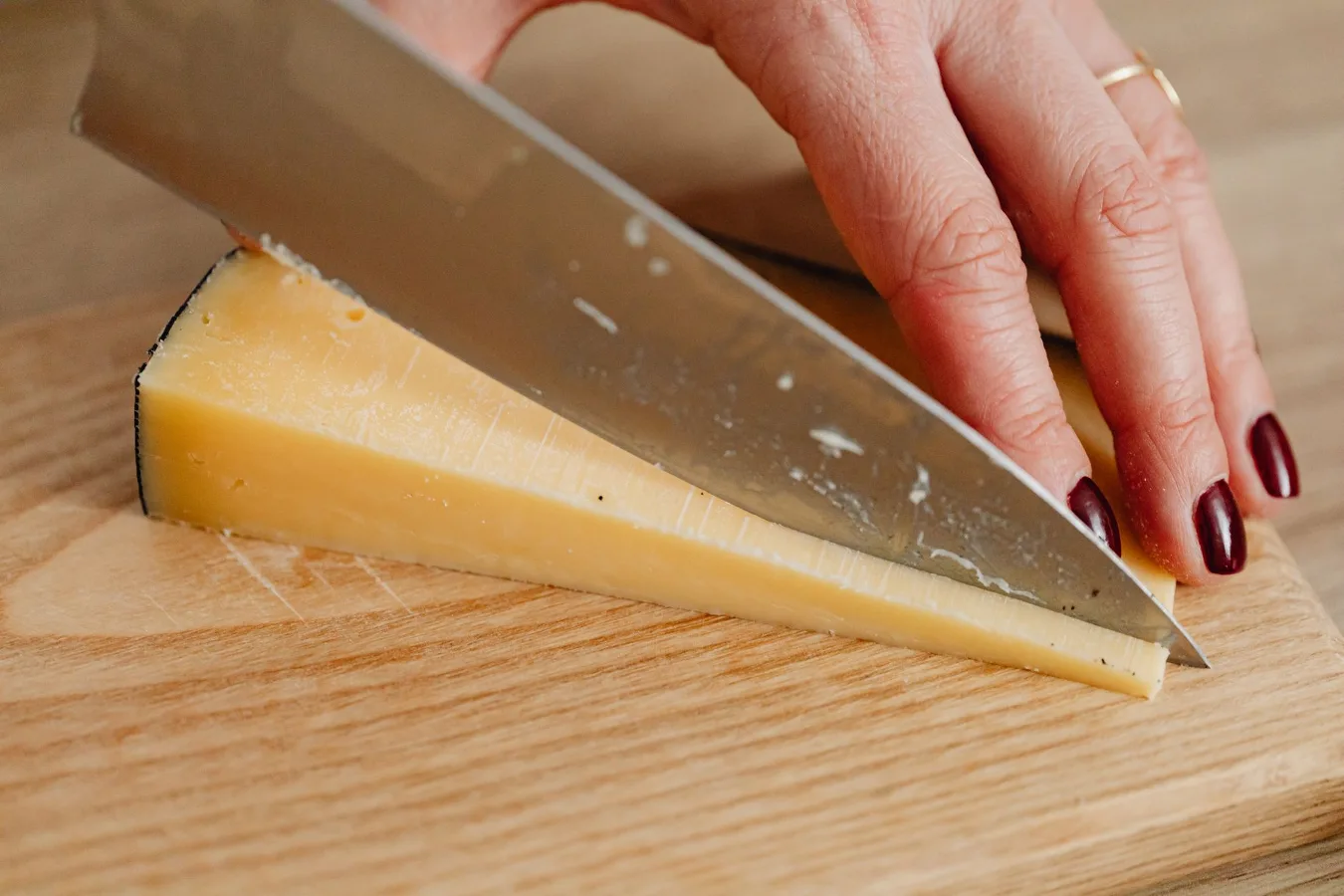
An edge grain cutting board is a wooden board made by arranging long strips of wood so the edges face up on the cutting surface. For many home cooks, it sits in the practical middle ground: more budget-friendly than end grain, more substantial than a thin plastic board, and often easier on knives than cheaper, rougher surfaces. the best cutting board materials for home kitchens offers more detail on this point.
If you are trying to decide whether an edge grain board is the right choice, focus on how you cook. These boards usually make sense for everyday chopping, slicing, and prep work in a home kitchen. They are not the only good option, but they are one of the most balanced choices for people who want a wood board without stepping into the higher-maintenance, higher-cost world of end grain. choosing between edge grain and end grain boards offers more detail on this point.
Quick answer: what makes edge grain boards different?
Edge grain boards are built from narrow wood pieces glued together with the grain running lengthwise. That construction gives the board a clean, linear look and a solid feel. Compared with face grain boards, edge grain boards are usually more stable and more practical for regular cutting. Compared with end grain boards, they are typically less forgiving on knives but also simpler to make and often easier to price.
The main appeal is balance. An edge grain cutting board can offer a good mix of durability, appearance, and everyday usability without demanding the care level of a premium butcher-block-style board. For many kitchens, that is exactly the right trade-off.
How edge grain compares with other cutting boards
The easiest way to judge an edge grain board is to compare it with the two other common wooden constructions: face grain and end grain. Each one behaves differently in real kitchen use.
| Board type | How it is made | Main strengths | Main trade-offs |
|---|---|---|---|
| Edge grain | Wood strips are joined so the long edges form the cutting surface | Balanced durability, attractive wood pattern, often more affordable than end grain | Usually harder on knives than end grain, can still show wear over time |
| Face grain | The wide face of the wood is on top | Often the most decorative, frequently light and inexpensive | More prone to visible knife marks and warping if poorly made |
| End grain | Wood fibers face up like a bundle of straws | Very knife-friendly, often self-healing in appearance, premium feel | Heavier, more expensive, usually more maintenance-sensitive |
For most shoppers, the decision is not about which board is universally best. It is about which construction matches the cooking style, upkeep tolerance, and budget. Edge grain is often the most practical compromise when you want real wood but do not need a specialty board.
Who an edge grain cutting board is best for
An edge grain board is a strong fit for people who want a dependable all-purpose board for vegetables, herbs, fruit, bread, cheese, and general meal prep. It is especially useful if you want the warmth and stability of wood without paying for a top-tier end grain board.
It is also a sensible option for kitchens where the board will be used often but not abused. Daily home cooking, light carving, and prep work are exactly the kind of tasks that suit this construction. If you mostly slice soft foods and do not want to baby your board, edge grain is usually comfortable to live with.
On the other hand, if your priority is the gentlest possible surface for high-end knives, end grain has the edge. If your priority is a low-cost backup board for raw meat, a simple nonporous synthetic board may be more appropriate. Edge grain occupies the middle.
Why people choose edge grain boards
1. They offer a practical balance
The most useful quality of an edge grain board is not one standout feature. It is the combination of several good traits: solid feel, appealing wood grain, reasonable durability, and a user experience that works well for everyday cooking.
2. They look refined without being overly delicate
Edge grain boards often have a striped, linear appearance that feels more polished than a plain slab board. That makes them suitable for both prep and serving, especially when you want a board that looks presentable on the counter or table.
3. They are often easier to justify than premium alternatives
Because the construction is simpler than end grain, edge grain boards are often easier to shop for at a moderate price point. That matters if you want a quality wood board but do not want to treat it as a luxury purchase.
Trade-offs you should understand before buying
An edge grain cutting board is not automatically the best choice for every kitchen. The limitations are worth understanding so you do not buy the wrong board for your habits.
Knife friendliness is good, but not the best
Edge grain is generally kinder to knives than many cheap surfaces, but it does not offer the cushioned feel associated with end grain. If you use very sharp knives often, you may notice the difference over time.
Scratches and marks can still show
Wood boards develop use marks. That is normal. Edge grain boards can show cut lines and wear patterns, especially in the center where most chopping happens. A little wear is expected; deep gouging usually means the knife angle or cutting style is too aggressive. how wood cutting board grain affects performance offers more detail on this point.
Moisture management still matters
Wood is forgiving in daily use, but it is not carefree. Edge grain boards should not be soaked or left wet. Repeated exposure to standing water can cause warping, separation at the glue joints, or surface roughness over time.
Orientation affects behavior
A common misconception is that all wood boards perform about the same because they are “just wood.” The grain orientation changes the way the surface responds to cutting pressure, moisture, and wear. That is why construction matters as much as species or appearance.
What to look for when shopping for one
If you are comparing edge grain boards, focus on the features that affect daily use rather than decorative claims.
Wood species
Different hardwoods bring different practical qualities. Maple, walnut, cherry, and acacia are common examples you will see in wood boards. The right choice depends on the look you want, how much weight you prefer, and how you feel about long-term care. Harder woods may resist surface wear better, but appearance, maintenance, and grain character also matter.
Thickness and weight
A board that feels too light may slide around or feel unstable during chopping. A heavier board tends to feel more secure, but it also becomes less convenient to move, wash, and store. For many homes, the sweet spot is a board that feels steady without becoming a chore.
Feet or grip features
Some boards include rubber feet or a non-slip base. That can improve safety, especially on smooth countertops. The trade-off is that feet can affect whether you can flip or reverse the board, and some users prefer a fully flat board for easier storage or serving.
Surface finish
Look for a food-safe finish that is appropriate for wood boards and easy to renew. A board should feel sealed enough to resist everyday moisture, but not so coated that it becomes slick, sticky, or hard to maintain.
Edge details
Rounded corners and smooth edges matter more than many shoppers realize. They make the board easier to handle and more comfortable to clean. Poorly finished edges can also be a sign of rushed manufacturing.
Common mistakes to avoid
- Buying only for appearance. A pretty board that is too thin, too light, or poorly finished may disappoint quickly.
- Ignoring maintenance needs. Wood boards require occasional oiling and sensible cleaning habits.
- Using one board for everything without a plan. Many kitchens benefit from separate boards for produce, bread, and raw proteins.
- Leaving the board wet after washing. Drying matters as much as cleaning.
- Choosing size without thinking about storage. A board that is too large for the available counter or cabinet space becomes annoying fast.
- Assuming all hardwood boards are equally durable. Construction quality is just as important as the wood name on the listing.
How to care for an edge grain cutting board
Care is straightforward, but consistency matters. Wash the board by hand with mild soap and warm water, then dry it promptly. Do not put a wooden cutting board in the dishwasher unless the manufacturer specifically says it is safe, which is uncommon for wood.
Periodically treating the board with a suitable cutting board oil or conditioner can help support the wood and reduce dryness. The exact schedule depends on use, cleaning frequency, and indoor conditions, so let the board’s appearance and feel guide you. If the surface starts looking dry, dull, or rough, it likely needs attention.
Store the board in a way that allows air circulation. Leaning it upright in a dry space is often better than trapping it flat against a damp surface. If the board has one side used for prep and the other reserved for serving, keep that habit consistent so wear is distributed predictably.
When a different board may be the better choice
Edge grain is versatile, but it is not always the right answer. A few situations point to other options.
If your top priority is the gentlest possible cutting surface for expensive knives, end grain may be worth the extra cost and care. If you want a lightweight, easy-to-sanitize board for raw meat or messy prep, a quality plastic board may be the more practical tool. If you want a purely decorative serving board, face grain can work, though it is usually less resilient for heavy cutting.
In other words, the best board depends on the job. A good kitchen often benefits from more than one surface.
Practical buying advice for US shoppers
For shoppers in the United States, the easiest way to narrow the field is to decide how the board will live in your kitchen. If it will stay on the counter and handle most daily prep, a medium-to-heavy edge grain board with a stable finish is a smart starting point. If it will be carried to the table for serving, consider how it looks from both sides and whether the weight feels comfortable in hand.
Also think about the other tools in your kitchen. High-quality knives, a stable prep surface, and a sensible cleaning routine all work together. A good board is not an isolated purchase; it is part of the workflow.
FAQ
Is an edge grain cutting board good for knives?
Yes, generally. It is usually kinder to knives than many inexpensive surfaces, though it is not as forgiving as end grain.
Is edge grain better than end grain?
Not universally. Edge grain is often simpler, more affordable, and easier to live with. End grain is typically better for maximum knife friendliness and a more premium feel.
Can an edge grain board be used for raw meat?
It can be used, but many cooks prefer to keep a separate board for raw proteins so cleaning and food safety are easier to manage.
How do I clean an edge grain cutting board?
Wash it by hand with mild soap and warm water, dry it right away, and avoid soaking or dishwashing it unless the maker explicitly allows that.
What is the biggest mistake people make with wood boards?
Letting moisture sit on the board. Water left on the surface or repeated soaking can shorten the life of any wood cutting board.
Is an edge grain cutting board worth it?
For many kitchens, yes. An edge grain cutting board is a sensible choice if you want real wood, dependable daily performance, and a look that feels more refined than a basic utility board. It is especially compelling for home cooks who value a balanced mix of durability, knife comfort, and maintenance that does not feel excessive.
If you want the most luxurious feel, end grain is still the premium benchmark. If you want the cheapest possible work surface, plastic may be more practical. But if you want one board that sits comfortably between those extremes, edge grain is one of the easiest options to justify.