
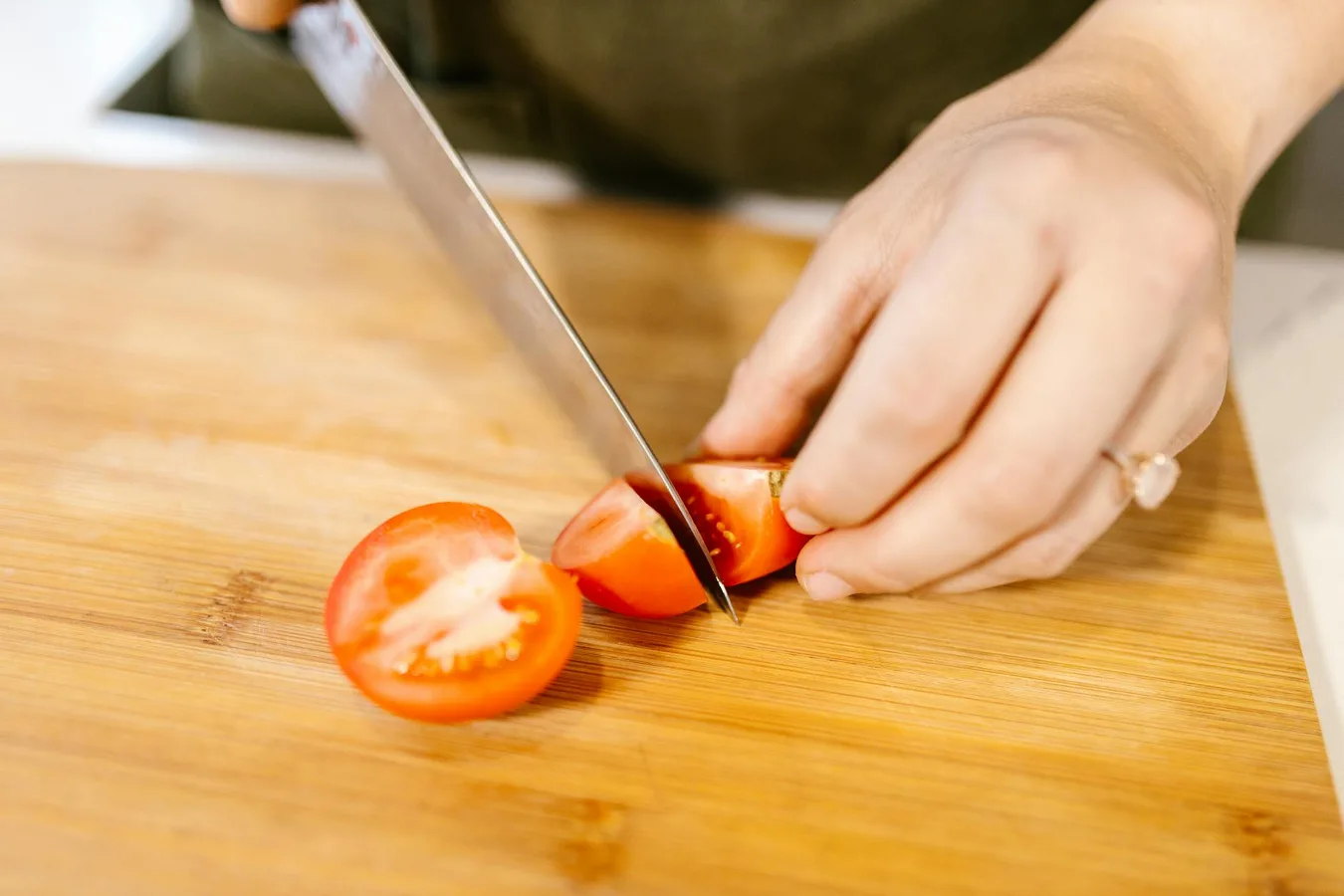
A cherry cutting board is a strong, attractive hardwood option for everyday food prep. For many home kitchens, it offers a good balance of knife-friendliness, stability, and a warmer look than lighter boards, but it still needs regular care to stay smooth and resist moisture damage. How to Choose a Japanese Cutting Board offers more detail on this point.
If you are deciding whether cherry is the right choice, the most useful question is not just whether it looks nice. It is whether you want a board that can handle chopping, slicing, and serving while fitting your cleaning habits, knife set, and kitchen environment.
When a cherry cutting board makes sense
Cherry boards are worth considering if you want a hardwood board with a refined appearance and a surface that is generally gentle on knives compared with very hard materials like glass, stone, or bamboo-style boards that can feel harsher in use. Cherry also works well in kitchens where the board may stay on the counter between uses and double as a serving piece.
They tend to appeal to cooks who value a natural wood look and do not mind routine maintenance. If you are willing to wash carefully, dry promptly, and oil the board when needed, cherry can be a long-term kitchen tool rather than a disposable prep surface.
They may be less ideal if you want something that can be left wet, tossed into a dishwasher, or abused with heavy moisture and minimal upkeep. That is the real trade-off: cherry rewards basic care, but it is not low-maintenance in the way some synthetic boards are.
Step-by-step criteria for choosing one
1. Think about how you cook
The best cutting board depends on the jobs it will do most often. For vegetables, fruit, bread, cheese, and general prep, a cherry board can be a comfortable everyday choice. If you regularly cut very juicy meats or work with a lot of raw proteins, you may prefer to keep a separate board for sanitation and convenience.
Many kitchens do best with more than one board. A cherry board can be the attractive all-purpose board, while a separate plastic or composite board handles raw meat or especially messy prep.
2. Decide whether appearance matters in your kitchen
Cherry has a warm tone that usually deepens over time, which is part of its appeal. Some buyers like the way the wood develops character with use; others may prefer a lighter board that hides surface marks differently. If the board will live on the counter, the grain and color become part of the kitchen’s visual space, so aesthetics matter more than many shoppers expect.
This is an overlooked consideration: many people shop for performance only, then realize the board’s look affects how often they leave it out and use it. A board that is pleasant to see often gets used more consistently.
3. Choose the right construction
Cherry boards are commonly made in edge grain or end grain construction, and the choice affects feel, upkeep, and cost. End grain boards are often chosen for a more forgiving cutting surface and a butcher-block style look, while edge grain boards are typically simpler and more straightforward for everyday use. walnut end grain cutting board offers more detail on this point.
If you want a board mainly for general prep and serving, edge grain is often practical. If you want a more premium feel and do not mind extra care, end grain can be appealing. Either way, construction quality matters more than cherry alone.
4. Check size against your workspace
A board should suit your counter space, storage, and typical ingredients. A board that is too small can feel cramped when chopping herbs or handling large produce, while an oversized board may be awkward to move, wash, or store.
Before choosing, think through where it will live: on a rack, in a cabinet, or out on the counter. A beautiful cherry board that is hard to store is often used less than a simpler board that fits the kitchen well.
5. Look at thickness and stability
Thickness affects how stable the board feels during chopping and whether it can handle regular use without flexing. A thicker board is often more substantial and less likely to slide or feel flimsy, but added weight can make cleaning and drying more awkward. how to clean a wooden board offers more detail on this point.
Balance is the key. The goal is a board that feels secure under a knife but is still manageable for everyday handling.
What cherry wood is good at
It offers a knife-friendly surface
Cherry is a hardwood, and that gives it a practical advantage over many hard, glossy surfaces. For most home cooks, a well-made cherry board feels comfortable under the knife and is less punishing on edges than very rigid materials.
It has a balanced everyday feel
Cherry boards often sit in a useful middle zone. They are not the most rustic option, and they are not the most maintenance-free option, but they can feel polished without being fussy. That balance makes them a sensible choice for cooks who want something functional and pleasant to use.
It works well as a serving board
Because cherry has a warm, natural look, many people use it beyond chopping. It can work for cheese, bread, sliced fruit, or a simple appetizer spread. If you want one board to do more than one job, cherry is an easy material to live with visually.
Where cherry boards have limitations
Cherry cutting boards are not automatically the best choice for every household. The material still needs careful cleaning and prompt drying. Leaving it in standing water, using harsh detergents, or storing it while damp can shorten its life and contribute to warping or surface damage.
Another limitation is that wood boards can show knife marks over time. That is normal and not necessarily a flaw, but buyers who want a surface that looks untouched for years may be disappointed. A cherry board usually develops character through use rather than staying pristine.
One common misconception is that all wood boards are equally forgiving. They are not. Construction quality, finish, and care habits all affect how a cherry board performs over time.
How to care for a cherry cutting board
- Wash by hand. Use mild soap, warm water, and a soft sponge or cloth. Avoid soaking the board.
- Dry immediately. Stand it upright or lean it so both sides can air-dry evenly.
- Oil periodically. Use a food-safe board oil or conditioner when the wood looks dry or feels rough.
- Store it in a dry place. Keep it away from constant sink splash, steam, or prolonged humidity when possible.
- Use both sides wisely. If the board design allows, rotating use can help even out wear.
Care routines do not need to be complicated. What matters most is consistency. Wood boards usually suffer from neglect more than from normal chopping.
If a cherry board starts to look dull, feel rough, or absorb moisture too quickly, that is often a sign it needs conditioning rather than replacement.
What to avoid
- Do not put it in the dishwasher.
- Do not let it sit in the sink.
- Do not use abrasive scrubbers that can rough up the surface.
- Do not rely on one board for everything if you frequently prep raw meat and delicate foods together.
- Do not ignore small cracks, separation, or repeated cupping.
These mistakes matter because they shorten the usable life of the board and can make the surface less pleasant to work on. A cherry board is durable enough for regular kitchen use, but it still depends on sensible handling.
Cherry compared with other popular board options
| Board type | What it does well | Trade-off |
|---|---|---|
| Cherry wood | Balanced feel, attractive appearance, knife-friendly surface | Needs regular hand care |
| Maple wood | Classic, durable, common for prep boards | Appearance is usually more plain |
| Walnut wood | Rich color and premium look | Often costs more and still needs care |
| Bamboo | Harder surface and often budget-friendly | Can feel harsher on knives |
| Plastic | Simple cleaning and useful for raw proteins | Less elegant, can scar and wear visibly |
If your priority is low maintenance, plastic may be easier. If you want a board that looks better on the counter and feels more refined in use, cherry has a strong case. If you want a highly traditional butcher-block style board, maple is often part of the comparison as well.
Examples of good use cases
For everyday vegetable prep
A cherry board works well for onions, herbs, citrus, cucumbers, and other daily ingredients. It offers enough visual warmth to feel like part of the kitchen rather than just a tool.
For serving and presentation
Cherry can be a smart choice for bread service, cheese boards, and small platters. The wood tone tends to make food look intentional without needing elaborate presentation.
For a giftable kitchen upgrade
Because the material feels classic and useful, a cherry cutting board is often chosen as a practical gift. The main caveat is that the recipient should be the kind of person who will actually maintain a wood board.
Checklist before you buy
- Does the board fit your counter and storage space?
- Will it be used mostly for prep, serving, or both?
- Do you want edge grain or end grain construction?
- Are you comfortable with hand washing and drying?
- Do you need a separate board for raw meat?
- Is the finish food-safe and appropriate for kitchen use?
- Does the thickness feel practical for your routine?
If you answer those questions honestly, you will usually end up with a better cherry board than by shopping on appearance alone. The best choice is the one that fits your cooking habits, not just your countertop color.
FAQs
Is a cherry cutting board good for knives?
Yes. A well-made cherry cutting board is generally a knife-friendly choice for everyday kitchen prep, especially compared with harder or less forgiving surfaces.
Does cherry wood darken over time?
Cherry is known for developing a deeper tone as it ages. That change is part of the wood’s character and is usually considered normal.
How do I clean a cherry cutting board?
Hand wash it with mild soap and warm water, then dry it right away. Avoid soaking and never put it in the dishwasher.
Is cherry better than maple for a cutting board?
Neither is universally better. Cherry is often chosen for its warmer appearance, while maple is commonly valued for its classic butcher-block feel. The better option depends on your style and maintenance habits.
Can I use a cherry cutting board for raw meat?
You can, but many households prefer to keep a separate board for raw meat to make cleaning and food-safety routines simpler.
A cherry cutting board is best understood as a practical kitchen tool with an elevated look, not just a decorative board. If you want something useful for daily prep, pleasant to handle, and capable of aging nicely with proper care, it is a strong option. If you want the least maintenance possible, another material may fit better.