
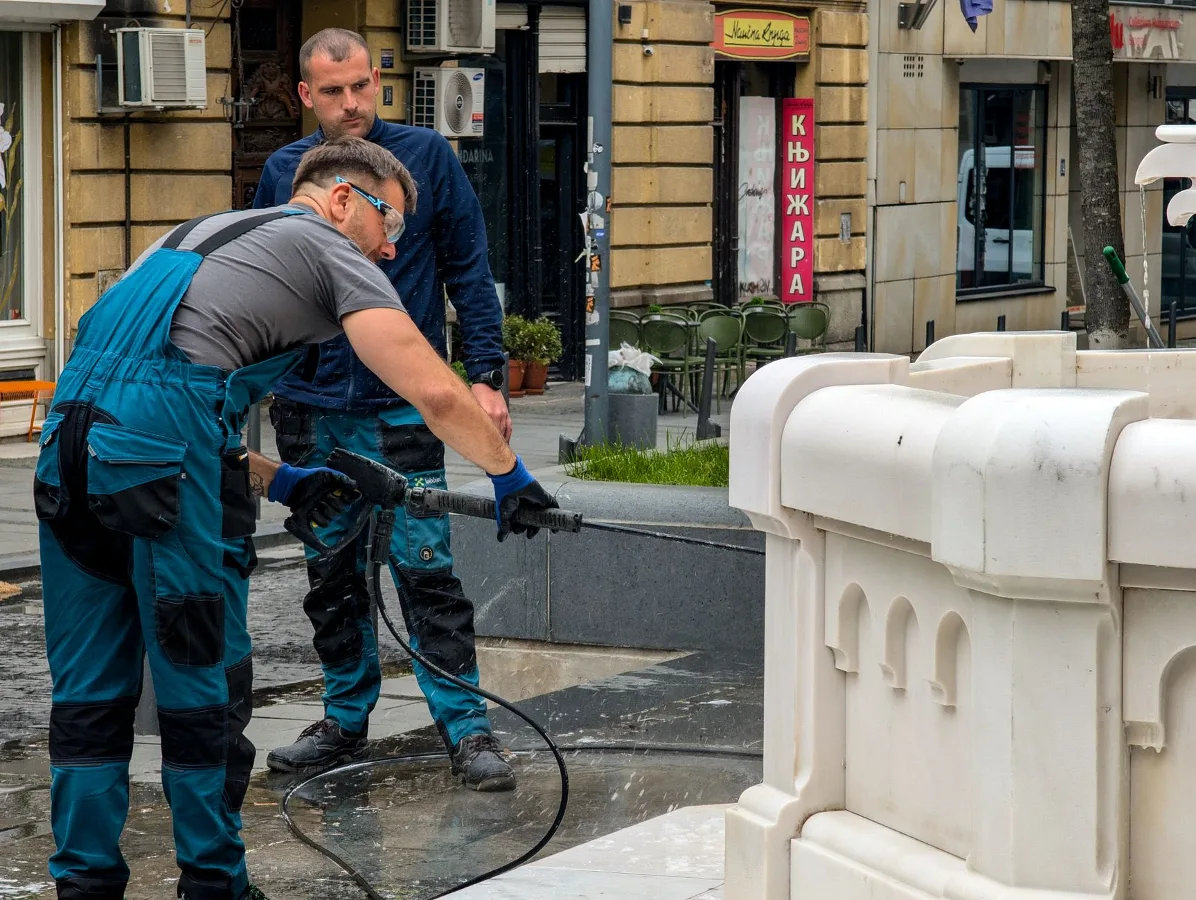
A pressure washer with a water tank is a practical choice when you need portable cleaning without relying on a garden hose connection. These units are built for mobility, so they can be useful for patios, fences, tools, outdoor furniture, vehicles, and other jobs where water access is limited or inconvenient. Pressure Washer Quick Connect Guide offers more detail on this point.
The key point is that this category is less about raw cleaning power and more about convenience, flexibility, and the ability to work in places a traditional hose-fed washer cannot easily reach. For many buyers, that trade-off is exactly the appeal. For others, especially those with large driveways or heavy buildup, a standard pressure washer may still be the better fit. pressure washer buyer’s guide offers more detail on this point.
Where a water-tank pressure washer makes sense
These washers are most useful in situations where you want a self-contained setup. That can mean cleaning at the far end of a yard, in a shed area, near a driveway without a nearby spigot, or in places such as a campsite, cabin, or storage lot. The tank turns the machine into a more independent tool, which can be a major advantage for light and medium cleaning tasks.
They also make sense for users who want a cleaner, more controlled setup. Instead of dragging a hose across landscaping or around obstacles, you can place the washer closer to the work area. That can reduce setup time and make quick cleanup jobs feel far less cumbersome.
There is, however, a common misconception worth clearing up: a water tank does not automatically make a washer more powerful or more efficient. It simply changes how water is supplied. The cleaning results still depend on the pump design, flow characteristics, nozzle choice, and the pressure washer’s overall build. how to choose a cordless washer offers more detail on this point.
Key factors that matter most
Tank size and practical runtime
Tank capacity is one of the first things shoppers look at, but the number alone does not tell the full story. A larger tank can mean fewer refills, yet it can also add bulk and weight. A smaller tank may be easier to move, but it can interrupt longer jobs. The best choice depends on what you clean most often and how far you usually work from a water source.
For occasional patio rinsing or cleaning garden furniture, a compact tank may be enough. For multi-step jobs, such as washing bins, planters, tools, and a section of fencing in one session, a larger reservoir may be more practical. Think in terms of workflow rather than just capacity.
Power source and portability
Many water-tank models are designed for cordless or battery-assisted use, though some may still require plug-in power. The power source affects portability, run time, and where you can use the machine. If your main goal is true off-grid cleaning, battery operation is usually the more relevant feature. If you primarily want hose-free cleaning but still work near an outlet, a corded design may be acceptable.
Portability is not only about whether the unit has wheels or a handle. Weight distribution, tank shape, hose length, and storage footprint all influence how easy the washer is to carry, lift, and store. A unit that looks compact online may still feel awkward when filled and moved across uneven ground.
Water delivery and cleaning consistency
Self-contained washers depend on how steadily they can draw water from the tank. A useful question is not simply whether the machine has a tank, but whether its water supply remains consistent during actual use. In practical terms, you want a setup that handles transitions smoothly when you switch between surfaces, angles, and spray patterns.
This matters because inconsistent water flow can make cleaning feel uneven. On delicate surfaces, it may be more of a nuisance than a dealbreaker. On stubborn dirt, it can slow you down and lead to repeated passes. If the washer is intended for regular outdoor use, steady delivery is more valuable than a flashy feature list.
Nozzles, spray control, and surface safety
Pressure washers are not one-size-fits-all cleaning tools. The nozzle or spray setting you use can dramatically change the result. A focused spray can help dislodge grime from hard surfaces, while a wider pattern is safer for softer materials and more delicate outdoor finishes.
This is especially important for garden-related use. Painted fences, deck boards, patio furniture, and decorative stone can all be damaged by overly aggressive spray. A water-tank model may be portable, but portability should never come at the expense of surface control. Look for useful spray adjustment, not just raw output.
Build quality and maintenance burden
Any washer with a built-in tank adds another part to maintain. That means checking for residue, rinsing the reservoir as needed, and making sure the tank seals and connections remain clean. For buyers who want a tool that stays ready with minimal fuss, easier maintenance can be just as important as performance.
Materials matter here. A sturdier tank and solid fittings are worth prioritizing because the machine will likely be moved, filled, emptied, and stored repeatedly. The best portable washer is not just the one that cleans well on day one, but the one that remains simple to use after repeated seasonal cleanup.
Practical advantages over a standard hose-fed washer
The biggest advantage is independence from fixed water access. That can be a real benefit for homeowners with awkward outdoor layouts, renters with limited hookups, or anyone who needs a quick solution away from the main house. It can also make cleaning feel more targeted because you bring the water source to the task.
Another advantage is setup speed. For smaller jobs, a self-contained washer can be faster to deploy than dragging out hoses, checking connections, and managing reach. If you clean frequently but only for short periods, convenience may matter more than maximum output.
There is also a storage advantage in some cases. A compact unit with an integrated tank can reduce the number of separate parts you need to store, though this depends on the design. For people trying to simplify a garage or shed, fewer loose accessories can be a welcome change.
Where these washers fall short
The main limitation is endurance. A tank-based design usually trades unlimited water supply for portability, so refilling becomes part of the process. If you plan to clean large paved areas, tall fencing, or heavily soiled surfaces, interruptions can become frustrating.
They can also be less suitable for users who expect strong, prolonged cleaning sessions. If your regular tasks involve extensive algae removal, major mud buildup, or repeated washing over large square footage, a hose-fed pressure washer may deliver a smoother experience. The convenience of the tank may not outweigh the extra downtime.
Another trade-off is weight. Once filled, the machine may be significantly heavier and harder to maneuver, especially on slopes, steps, or rough ground. Buyers often focus on compactness and overlook the real-world strain of moving a full tank across a yard.
How to decide if you actually need one
Start with the places you clean most often. If your cleaning tasks are usually close to an outdoor faucet, a traditional pressure washer may still be the simpler and more efficient option. If access is inconsistent, temporary, or far from the house, a water-tank model becomes much more appealing.
Next, think about job size. Small and medium jobs tend to suit tank-based machines better than large-scale cleaning. If you mostly rinse outdoor furniture, spot-clean patios, or freshen up equipment, the portability may be worth it. If you regularly wash wide driveways or long fences, refill frequency could become a drawback.
You should also consider whether convenience is your main priority. Some buyers want the fastest possible cleaning system. Others want a washer they can grab and use without planning around hose length, faucet access, or garden layout. The right answer depends on which problem you are trying to solve.
Alternatives worth considering
If you want portability but do not need a built-in water tank, a compact cordless pressure washer with an external bucket or water pickup setup may be enough. That can offer flexibility without adding the bulk of an integrated reservoir.
If you already have hose access but want easier movement, a lightweight electric pressure washer may be the better compromise. You get continuous water supply and often simpler maintenance, while still keeping the machine manageable for household use.
For very light outdoor cleaning, a pump sprayer, hose nozzle, or garden hose attachment may be all you need. These options will not replace a pressure washer for stubborn buildup, but they can be more sensible for rinsing dirt from tools, planters, and furniture.
Common mistakes buyers make
- Focusing only on tank size and ignoring how heavy the unit becomes when filled
- Assuming a water tank automatically means stronger cleaning performance
- Overlooking refill convenience for the kinds of jobs they actually do
- Choosing a spray system without enough control for delicate garden surfaces
- Buying for maximum portability without checking storage size or handling comfort
- Ignoring maintenance needs for the reservoir and fittings
What to look for before buying
A good decision usually comes down to four practical questions: how often you clean, where you clean, how much water access you have, and how much refilling you are willing to tolerate. If the washer is meant for occasional, mobile use, portability should carry more weight. If it is meant to replace a traditional pressure washer, you will want to be much stricter about water delivery and overall ease of use.
Also think about the surfaces you plan to clean. Hard surfaces tolerate more aggressive washing, while painted, composite, or decorative materials need a gentler approach. A versatile nozzle system can make a modest machine more useful than a stronger one with poor control.
For garden and outdoor use, a pressure washer with a water tank is best understood as a convenience tool first and a heavy-duty cleaning tool second. That is not a weakness; it is simply the right way to evaluate the category. If you buy with the use case in mind, you are more likely to end up with a machine that feels practical rather than compromised.
A sensible way to choose
If you need a machine for short, independent cleaning jobs and do not always have hose access, a pressure washer with a water tank can be an excellent fit. If you mainly clean large areas or want the least interruption during longer sessions, a hose-fed model will usually be the better long-term choice.
The smartest purchase is the one that matches your real cleaning routine, not the one with the most impressive-sounding feature. For many homeowners, that means choosing a tank-based washer for flexibility and accepting its limits. For others, it means recognizing that a standard pressure washer still offers the best balance of power, continuity, and convenience.